
Overview
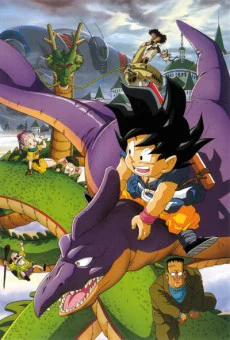
Dragon Ball: The Path to Power is a 1996 anime movie that stands apart as an alternate retelling rather than a straight continuation. It condenses elements from the original Dragon Ball search and the later Red Ribbon Army storyline into a single 74 minute feature, making it a compact way to see an earlier era of the franchise reframed. Its place in the catalog matters because it shows how the Dragon Ball world can be revisited with a different narrative arrangement while still keeping the action, adventure, and humor that define the series.
The experience leans on martial arts, superpowers, comedy, and light science fiction, with familiar themes such as androids, robots, and dragons. Because the film is mild in content and self contained, it may suit viewers who want a shorter sample of early Dragon Ball or fans curious about an alternate take on the original story. Those who prefer to start with the main series may still find it approachable, but it works best as a companion piece to the broader franchise rather than a replacement for it.
An English dub is available, and the film can be found on Bilibili TV. That availability makes it easy to try, though its status as an individual movie means it should be approached as its own entry, not as the sum of the franchise.
Synopsis
Dragon Ball: The Path to Power is a 1996 animated film that reimagines the opening chapter of the Dragon Ball saga. Its story centers on Goku, a remarkably strong boy with a monkey tail who has grown up in isolation and knows little about the wider world. When he meets Bulma, a clever young inventor searching for the wish-granting Dragon Balls, he is drawn into a journey that introduces him to allies such as the martial arts master Kame-Sen'nin.
The film blends elements of Goku's first hunt for the Dragon Balls with the later Red Ribbon Army conflict, giving familiar events a different arrangement. As Goku and his companions travel and train, they come into contact with the Red Ribbon Army, a military force also pursuing the Dragon Balls for its own ambitions. The group's pursuit puts them on a collision course with Goku, and the film builds its main conflict around that escalating encounter rather than following the original series step by step.
Trailer
Should You Watch It?
Watch it if you enjoy
- Watch if you want a compact, 74-minute alternate retelling of early Dragon Ball, including Goku meeting Bulma and Kame-Sen'nin.
- Try it if you are curious how the Red Ribbon Army storyline changes when the army finds Goku instead of Goku finding them.
- A good option if you want an English-dubbed Dragon Ball movie available on Bilibili TV and do not need strict canon order.
- Best for viewers with some familiarity with early Dragon Ball, since it compresses elements from the first search and later Red Ribbon arc.
It may not suit you if
- May not suit viewers who want the definitive canon version of early Dragon Ball; it is an alternate movie retelling, not a replacement.
- Skip if you prefer a step-by-step adaptation of the original manga or anime episode order rather than a compressed rearrangement.
- Could disappoint those expecting a direct continuation of the TV chronology or a sequel to prior Dragon Ball films.
- Not ideal if you have no familiarity with Goku, Bulma, or the Dragon Balls, though the film still introduces them.
The primary starting work is a movie, so the full film is the natural Volluble Test Drive. This gives you the complete story instead of applying an episodic trial to a feature-length work.
Why It Connects With Audiences
Why people love it
- It offers a rare anniversary-era alternate take on Dragon Ball, produced for the original anime's tenth anniversary.
- The 74-minute runtime makes early Dragon Ball's action, adventure, and comedy easy to sample in one sitting.
- It folds the Red Ribbon Army conflict into Goku's first Dragon Ball hunt, giving familiar material a different narrative arrangement.
- As the last Dragon Ball film made with cel animation, it holds historical interest for animation and franchise fans.
Common criticisms
- Its compressed retelling of two early storylines may feel rushed or less complete than the original series to some viewers.
- Because it rearranges events and is not canon to the TV chronology, newcomers may find its place in the franchise confusing.
- Some may see it as an optional companion piece rather than essential viewing, since it does not replace the original series.
- The cel-animation style may feel dated to viewers used to later Dragon Ball theatrical films.
Volluble DNA
A quick profile of the title’s dominant storytelling ingredients.
Characters and Voice Actors16 characters
Gokuu Son
Main character- Japanese: Masako Nozawa
- English: Stephanie Nadolny
Pu’ar
Supporting character- Japanese: Naoko Watanabe
- English: Monika Antonelli
Bulma
Supporting character- Japanese: Hiromi Tsuru
- English: Tiffany Vollmer
Jinzouningen 8-gou
Supporting character- English: Mike McFarland
- Japanese: Shouzou Iizuka
Oolong
Supporting character- English: Bradford Jackson
- Japanese: Naoki Tatsuta
Umigame
Supporting character- English: Christopher Sabat
- Japanese: Daisuke Gouri
Metallic-gunsou
Supporting character- English: Chris Rager
- Japanese: Hisao Egawa
General White
Supporting character- English: Kyle Hebert
- Japanese: Hirohiko Kakegawa
General Blue
Supporting character- English: Sonny Strait
- Japanese: Bin Shimada
Staff Officer Black
Supporting character- English: Christopher Sabat
- Japanese: Masaharu Satou
Commander Red
Supporting character- Japanese: Kenji Utsumi
- English: Josh Martin
Yamcha
Supporting character- English: Christopher Sabat
- Japanese: Tooru Furuya
Shen Long
Supporting character- Japanese: Kenji Utsumi
- English: Christopher Sabat
Muten Roushi
Supporting character- English: Mike McFarland
- Japanese: Kinya Aikawa
Colonel Violet
Supporting character- Japanese: Naoko Watanabe
- English: Kasey Buckley
Narrator
Supporting character- Japanese: Jouji Yanami
- English: Brice Armstrong
Production and Staff26 credits
View all 15 additional credits
Production Background
Dragon Ball: The Path to Power is a 1996 Japanese animated movie based on Akira Toriyama's Dragon Ball manga. It was made as a different retelling of the original Dragon Ball anime story, drawing on the first search for the Dragon Balls and the later Red Ribbon Army arc. The film runs 74 minutes and was released in Japan on March 2, 1996.
The movie was produced for the tenth anniversary of the original Dragon Ball anime. It premiered as part of the Toei Anime Fair, where it was shown with the film version of Neighborhood Story. It was the final Dragon Ball film made with cel animation.
It also remained the most recent theatrically released Dragon Ball film until Dragon Ball Z: Battle of Gods arrived in 2013. An English dubbed version was produced, and the movie is listed as streaming on Bilibili TV.
Franchise Context
Dragon Ball: The Path to Power is a 1996 anime film that sits within the Dragon Ball franchise as an alternate retelling of the original series rather than a direct continuation of its television chronology. It revisits early Dragon Ball material, including Goku's first meeting with Bulma and Kame-Sen'nin, while also folding in elements from the later Red Ribbon Army storyline. Because it reconfigures events rather than extending them, the movie functions as a stand-alone theatrical version of familiar franchise material.
The film was produced for the tenth anniversary of the original Dragon Ball anime and is counted as the seventeenth Dragon Ball film. It was also the last Dragon Ball theatrical feature made with cel animation and the final theatrical Dragon Ball release until Dragon Ball Z: Battle of Gods in 2013. Its source material is Akira Toriyama's Dragon Ball manga, yet it adapts that material into a compressed movie narrative separate from the ongoing anime's episode order.
For viewers placing this entry in the larger franchise, The Path to Power is best understood alongside the original Dragon Ball manga and anime as an alternate movie retelling, not as a sequel to Dragon Ball Z or a spin-off centered on new characters. It shares the franchise's core heroes, martial arts action, and quest structure while presenting its own version of how those early adventures unfold.
Where This Fits in Dragon Ball
A spoiler-light guide to where this exact work fits within the broader Dragon Ball franchise.
-
Step 1
Start with the original Dragon Ball manga or anime, especially the early Dragon Ball search and the Red Ribbon Army arc, since this movie retells both in an alternate form.
-
Step 2
Treat Dragon Ball: The Path to Power as an optional alternate retelling rather than a required canon entry; it was produced for the original anime's tenth anniversary.
-
Step 3
Watch it after you have some familiarity with early Dragon Ball if you want a condensed, different take on Goku meeting Bulma and Kame-Sen'nin and on the Red Ribbon Army finding Goku.
-
Step 4
Afterward, return to the main Dragon Ball storyline or continue into later franchise entries such as Dragon Ball Z, because this film does not replace the original series.
Franchise Path
- Start with the original Dragon Ball manga or anime to see the canonical first Dragon Ball search and Red Ribbon Army arc.
- Then watch Dragon Ball: The Path to Power as a self-contained 1996 alternate retelling of that early material.
- For the main chronology afterward, continue with later Dragon Ball entries such as Dragon Ball Z.
After You Finish
Continue with
- No direct sequel follows this standalone movie; continue the franchise with the original Dragon Ball series or Dragon Ball Z.
- If you want the main story, return to the Dragon Ball anime or manga rather than treating this film as required canon.
Community Verdict
Quick reader and viewer signals from the Volluble community.
Would you recommend this?
Did the ending satisfy you?
Would you watch it again?
Report an issue
Spot something wrong on this page? Tell us what needs attention.
0 Comments
Be the first to comment.