
Overview
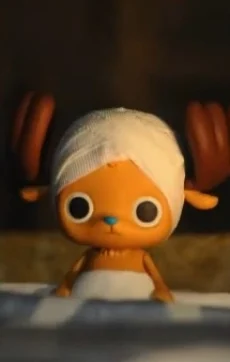
ONE PIECE: Cry heart is a compact 2014 stop-motion special made up of three shorts, each running about five minutes. Created by figure maker Banpresto, it sits at the edge of the larger One Piece media landscape and uses miniature figures and handmade animation rather than the franchise's usual serialized or feature-length format. Its value lies in that narrow focus: it treats familiar emotional passages as small visual studies, offering a different way to revisit moments many viewers may already know.
The experience is brief and tactile. The stop-motion style draws attention to pose, lighting, and physical presence, so the drama lands through staging and stillness as much as through dialogue or spectacle. Because each short is so short, it works as an easy curiosity for fans who want to see the series' themes filtered through an unusual production method, and it can be sampled without committing to a full season or film.
Newcomers should be aware that the shorts assume some familiarity with One Piece characters and key story beats; they are not a standalone introduction to the franchise. Even so, the low time commitment and clear dramatic focus may make them approachable for viewers who enjoy animation experiments, stop-motion, or small-scale tributes. The special is best understood as its own miniature work, not as a replacement for the main series or a summary of it.
Synopsis
ONE PIECE: Cry heart is a three-part anime special released in 2014, made up of short films that run about five minutes each. Rather than extending the main story, the collection revisits well-known emotional passages from Eiichiro Oda's One Piece manga through stop-motion animation, with physical figures posed and filmed frame by frame instead of drawn. The presentation grew out of a figure line from Banpresto whose figures were designed with this kind of homemade stop-motion filming in mind, giving the shorts a tactile, miniature quality distinct from the main animated series.
The central figures are the Straw Hat Pirates, and above all Monkey D. Luffy, whose bond with his crewmates gives these vignettes their weight. The selected moments lean on Drama and Fantasy rather than adventure: friendship tested by separation, promises made and kept, and farewells that linger long after they are spoken. Because each short is brief, the emphasis falls on a single character beat and the emotion surrounding it, so viewers are asked to recognize the scene rather than follow a long build-up.
The conflict in each piece is interior and relational. Characters confront loss, regret, and the cost of loyalty, and the resolution comes through feeling rather than through a battle won. The shorts are best understood as three self-contained emotional snapshots drawn from a larger narrative, assembled as a small stop-motion tribute rather than as a continuous storyline with its own beginning and end.
Trailer
Should You Watch It?
Watch it if you enjoy
- Try these shorts if you enjoy One Piece's emotional beats and want a brief, tactile stop-motion revisit.
- Sample them if you are curious how Banpresto's poseable figures translate into frame-by-frame miniature animation.
- Watch after you know the relevant manga or anime moments, since the shorts assume familiarity and can spoil highlights.
It may not suit you if
- You may want to skip if you need a self-contained introduction; the shorts assume One Piece characters and key story beats.
- They may not satisfy viewers seeking a full episode, arc, or substantial narrative, as each runs about five minutes.
- Those uninterested in merchandise-driven side projects or stop-motion experiments may find this peripheral.
This automatic starting point balances the series length, pacing, time commitment, and available Volluble research data. Editors can override it when firsthand knowledge suggests a better entry point.
Why It Connects With Audiences
Why people love it
- The stop-motion treatment gives familiar scenes a tactile, handmade quality that stands apart from the main anime's cel animation.
- Each short focuses on a single emotional beat, letting pose, lighting, and stillness carry the drama.
- The low time commitment makes it an easy curiosity for fans who want to revisit One Piece moments in a novel form.
Common criticisms
- The shorts are very brief, so some may feel they end before building much emotional momentum.
- Because they revisit known scenes, they can feel like merchandise-linked supplements rather than essential franchise entries.
- Newcomers may find them difficult to follow without prior familiarity with One Piece's characters and story.
Volluble DNA
A quick profile of the title’s dominant storytelling ingredients.
Characters and Voice Actors9 characters
Luffy Monkey
Main characterChopper Tony Tony
Main characterAce Portgas
Main characterSabo
Main characterNewgate Edward
Supporting characterKureha
Supporting characterGarp
Supporting characterHiluluk
Supporting characterDadan Curly
Supporting characterProduction Background
ONE PIECE: Cry heart originated as a merchandise-driven project from Banpresto rather than as an entry in the weekly television anime. The company's "Cry heart" figure line was deliberately designed to encourage buyers to create their own stop-motion shorts, and these three five-minute animated pieces were produced around that idea. Each short recreates a well-known scene from Eiichiro Oda's manga and its anime adaptation, drawing its source material from the original manga.
The special runs three episodes at roughly five minutes apiece and arrived during the winter 2014 season, with its run concluding in April 2015. Individual installments carry their own titles, among them Fuyujima ni Furu Sakura, Children's Dream, and Ace no Saigo, and the collection is alternatively known as One Piece: Banpresto's "Cry Heart" Short.
Its defining production choice is the use of stop motion, a technique that sets the shorts apart from the standard cel animation of the franchise's television and film entries. The approach ties the animation directly to the poseable figures that inspired it, making the project a crossover between collectible merchandise and animated storytelling rather than a conventional adaptation.
Franchise Context
ONE PIECE: Cry heart is a side work within the larger One Piece franchise, which began as Eiichiro Oda's manga and expanded into a long-running anime television series and a long list of feature films. This 2014 entry is neither a continuation of the main storyline nor a direct adaptation of a single arc. It is a short-form spin-off: three stop-motion specials, each running roughly five minutes, produced in connection with Banpresto's Cry heart figure line.
Its placement in the franchise is peripheral by design. Rather than advancing the Straw Hat Pirates' journey, the shorts revisit well-known moments from the manga and anime as brief animated recreations. The figures that inspired them were marketed with the idea that buyers could stage their own stop-motion sequences, so the project sits closer to merchandise promotion than to the serialized canon.
For viewers following the franchise, it functions as a stand-alone curiosity. It requires no particular episode order and does not feed back into the main narrative. It belongs to the same broad One Piece brand as the television series and films, yet it remains a distinct, limited production rather than a chapter of the ongoing story.
Where This Fits in One Piece
A spoiler-light guide to where this exact work fits within the broader One Piece franchise.
-
Step 1
Start with the main One Piece manga or anime. This special is a short side entry, not a substitute for the core story.
-
Step 2
Wait until you have reached the major moments that the shorts adapt. The special revisits emotional highlights, so watching too early can spoil reveals.
-
Step 3
View it as optional and alternate content: a set of three short stop-motion episodes, each around five minutes, made as a figure-related curiosity.
-
Step 4
Afterward, return to the main One Piece manga or anime at your previous point. Nothing in the later main storyline requires this special.
Franchise Path
- Main franchise path: begin with Eiichiro Oda's One Piece manga or Toei's TV anime.
- Optional side stop: ONE PIECE: Cry heart's three stop-motion shorts can be viewed after key emotional moments.
- Then return to the main One Piece story; this special sits outside required viewing order.
After You Finish
Continue with
- No continuation is needed; ONE PIECE: Cry heart is a complete, stand-alone side special.
Community Verdict
Quick reader and viewer signals from the Volluble community.
Would you recommend this?
Did the ending satisfy you?
Would you watch it again?
Sources2 sources
Report an issue
Spot something wrong on this page? Tell us what needs attention.
0 Comments
Be the first to comment.