
Overview
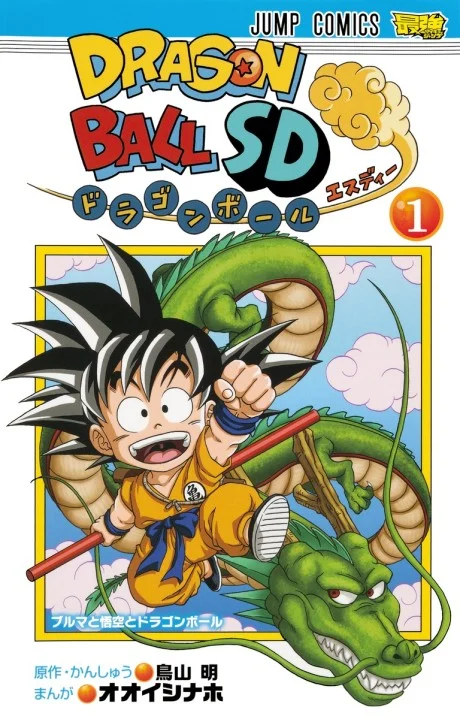
Dragon Ball SD is a comedic retelling of the original Dragon Ball saga, written and illustrated by Ooishi Naho. Launched in 2010 and still ongoing, this full-color manga presents the familiar adventures of Son Goku and friends through a super-deformed lens, emphasizing parody and lighthearted humor over the intense action of the main series. Its significance lies in offering a fresh, affectionate perspective on a beloved story, making it a notable curiosity for fans and a gentle entry point for newcomers.
Readers can expect a fast-paced, gag-driven experience that condenses and exaggerates key moments from the original narrative. The super-deformed art style renders characters in cute, exaggerated proportions, while the comedy leans into slapstick and self-aware references. Despite the humorous approach, the manga retains the core themes of friendship, martial arts, and adventure, delivering a breezy, entertaining read that never takes itself too seriously.
This manga is particularly approachable for those who may be intimidated by the length or intensity of the main Dragon Ball series, as well as for younger readers and anyone who enjoys parodies. Longtime fans will appreciate the in-jokes and the playful reimagining of iconic scenes. Dragon Ball SD stands as a charming companion piece rather than a replacement, inviting readers to revisit the world of Dragon Ball with a smile.
Synopsis
Dragon Ball SD is a comedy manga written and drawn by Ooishi Naho that retells the early adventures of Son Goku in a compressed, super deformed style. Rather than presenting a serious new chapter of the saga, it condenses and reshapes familiar material into short gag-driven episodes. The series began in 2010 and has continued to release new material since, marking it as an ongoing parody project rather than a single self-contained story.
The cast centers on Goku and Krillin, with other friends and figures from the original story appearing alongside them. Their personalities are exaggerated for comedic effect, and the artwork's small, rounded character designs reinforce the lighthearted tone. Episodes often lean on everyday training mishaps, friendly rivalries, and absurd situations, so the humor comes from how these well-known characters bounce off one another rather than from grand-scale drama.
The primary conflict is deliberately playful. Goku's pursuit of martial arts growth and the search for the Dragon Balls provide the framework, but the stakes are repeatedly undercut by slapstick and parody. Villains and mentors alike are treated as comic fixtures, and each installment tends to resolve its trouble through a punchline instead of a decisive battle. Readers looking for a breezy, affectionate send-up of the source material will find that focus sustained across the series.
Should You Read It?
Read it if you enjoy
- Read if you want a light, full-color, super-deformed gag retelling of early Dragon Ball featuring Son Goku and Krillin.
- Try it if you already know the original Dragon Ball and want an affectionate parody that condenses familiar moments into short comedic episodes.
- Pick it up if you prefer low-stakes slapstick and self-aware humor over the main series' serious action.
It may not suit you if
- May not suit readers seeking a serious new Dragon Ball chapter, sequel, or mainline continuation; it is positioned as an alternate parody retelling.
- May not suit those unfamiliar with early Dragon Ball, since much of the humor depends on recognizing the original cast and story beats.
- May not suit readers who dislike gag-driven pacing, exaggerated personalities, or super-deformed art.
- May not suit those wanting a completed story; it began in 2010 and is still listed as releasing, with no total chapters or volumes reported.
Why It Connects With Audiences
Why people love it
- Ooishi Naho's story-and-art approach gives the parody a distinct full-color, super-deformed identity rather than copying Toriyama's mainline style.
- The familiar cast of Goku, Krillin, and friends is used for friendly rivalries, training mishaps, and absurd situations that fans can recognize.
- It offers an approachable, breezy gateway for readers intimidated by the length or intensity of the original Dragon Ball saga.
Common criticisms
- Because it is a comedic retelling rather than new continuity, some readers may find the stakes deliberately undercut and the drama limited.
- The gag-driven, condensed format may feel slight or repetitive to readers wanting deeper martial-arts progression or long-form storytelling.
- Its humor leans on familiarity with the original Dragon Ball, so newcomers may miss many of the parody references.
- No chapter or volume total is reported, and the series remains ongoing, which may frustrate readers who prefer clear length or completion.
Volluble DNA
A quick profile of the title’s dominant storytelling ingredients.
Characters25 characters
Gokuu Son
Main characterVegeta
Main characterGohan Son
Main characterKuririn
Main characterBulma
Supporting characterPiccolo
Supporting characterPu’ar
Supporting characterMajin Boo
Supporting characterGyuumaou
Supporting characterChi-Chi
Supporting characterLunch
Supporting characterOolong
Supporting characterTenkaichi Budokai Announcer
Supporting characterUmigame
Supporting characterRan Fuan
Supporting characterNamu
Supporting characterBacterian
Supporting characterGiran
Supporting characterShu
Supporting characterStaff Officer Black
Supporting characterCommander Red
Supporting characterPilaf
Supporting characterMai
Supporting characterTrunks
Supporting characterFreeza
Supporting characterManga Staff3 credits
View all 1 additional credits
Production Background
Dragon Ball SD is a Japanese manga with both story and art credited to Ooishi Naho. Publication began on December 3, 2010, and the series is listed as still releasing, so no concluding chapter is recorded in the saved data. Within the wider Dragon Ball franchise it stands as its own individual manga title, catalogued separately from the original series rather than as a reissue or alternate edition of it.
The approach here differs from Akira Toriyama's original Dragon Ball manga, which was serialized from 1984 to 1995 and gradually moved from comedy toward action-driven fighting. This work is tagged as a comedy retelling and a parody, and it also carries a Full Color marker, indicating a color presentation. Its genre profile blends Action, Adventure, Comedy, Science Fiction and Supernatural elements, while the theme set includes Parody, Martial Arts, Aliens, Gods and Goddesses, Shounen and Coming of Age. The record lists its source material as manga, keeping it tied to the printed Dragon Ball lineage.
Chapter and volume totals are not reported, so the manga's overall length cannot be stated, and the entry remains marked as ongoing. No anime adaptation, English dub or streaming availability appears in the saved record, which fits its identity as a manga-only release. Its production profile rests on Ooishi Naho handling both writing and illustration and on the parody retelling format that sets it apart from the mainline Dragon Ball storyline.
Franchise Context
Dragon Ball SD is a manga spin-off within the Dragon Ball franchise, positioned as a comedic retelling of material drawn from Akira Toriyama's original series rather than as a sequel or continuation of it. The source manga by Toriyama ran in Weekly Shonen Jump from 1984 to 1995 and followed Son Goku from childhood onward as he trained in martial arts and searched for the seven Dragon Balls. This entry returns to that familiar cast and premise, with Son Goku, Krillin, and other friends from the original story, but approaches them through parody and exaggerated humor instead of mainline continuity.
Ooishi Naho is credited with both story and art on Dragon Ball SD, which began in December 2010 and remains ongoing. The SD in the title refers to the super deformed style associated with the retelling, and the record classifies the work as a comedy retelling with tags that include Parody, Shounen, and Martial Arts. Because it started long after the original manga concluded, it functions as a companion piece that runs alongside other franchise productions rather than as the next chapter of the original narrative.
For readers navigating the franchise, Dragon Ball SD is best understood as an alternate comedic take and a self-contained spin-off. It is neither a faithful adaptation of the original manga nor a canonical continuation of its events, and it does not stand outside the franchise as an unrelated work. Its appeal rests on familiarity with the characters and situations it reworks, making it a side entry to the broader Dragon Ball catalog rather than a starting point for it.
Where This Fits in Dragon Ball
A spoiler-light guide to where this exact work fits within the broader Dragon Ball franchise.
-
Step 1
Start with the original Dragon Ball manga by Akira Toriyama, beginning at volume 1, or its anime adaptation, so the foundational world, characters, and early story are clear.
-
Step 2
Dragon Ball SD is a comedic retelling and parody, so it works best after you already know the early Dragon Ball story; treat it as optional and alternate rather than required.
-
Step 3
Read Dragon Ball SD alongside or between early original Dragon Ball arcs if you want a lighter, full-color take, but do not use it as a replacement for the main story.
-
Step 4
After the original Dragon Ball, continue into the later Dragon Ball arcs and their adaptations to follow the larger franchise progression.
Franchise Path
- Start with Akira Toriyama's original Dragon Ball manga or its anime adaptation to learn Goku's early world, since Dragon Ball SD parodies that foundation.
- Treat Dragon Ball SD as an optional, alternate comedy retelling within the Dragon Ball franchise, not as a mainline sequel.
- After the original Dragon Ball, follow later Dragon Ball arcs and their adaptations for the larger franchise progression.
After You Finish
Continue with
- Dragon Ball SD is still releasing, so after catching up, continue with the mainline Dragon Ball manga or its anime adaptations.
- Because this is a spin-off comedy retelling, no direct Dragon Ball SD sequel is recorded beyond ongoing chapters.
- For the same parody tone, revisit early Dragon Ball SD chapters rather than expecting mainline continuity.
Community Verdict
Quick reader and viewer signals from the Volluble community.
Would you recommend this?
Did the ending satisfy you?
Would you read it again?
Sources2 sources
Report an issue
Spot something wrong on this page? Tell us what needs attention.
0 Comments
Be the first to comment.