
Synopsis
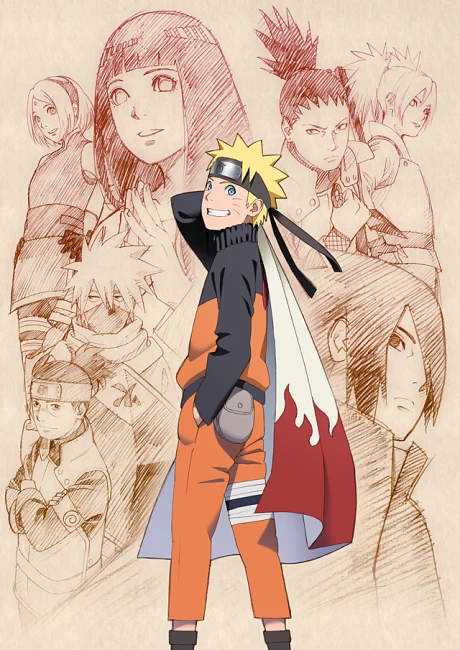
Naruto: Shippuden begins two and a half years after the original series, with Uzumaki Naruto returning to the Hidden Leaf Village after training away with the sage Jiraiya. Older, stronger, and still hungry for recognition, he rejoins his teammates Sakura Haruno and their teacher Kakashi Hatake, stepping into missions of a far higher rank than the ones he left behind.
The main conflict centers on the Akatsuki, a cloaked organization of elite shinobi hunting the tailed beasts and the hosts who carry them. Because Naruto holds the Nine-Tailed Fox sealed inside him, he becomes one of their most sought-after targets, forcing the village to weigh how much to protect him against how much to let him fight. Running alongside that threat is Naruto's continued pursuit of his friend Uchiha Sasuke, who abandoned the village to seek power from the rogue ninja Orochimaru.
The series pairs large-scale battles with the personal struggles of an ensemble cast, following Naruto and his peers as they grow from students into leaders while the wider shinobi world slides toward open war.
Trailer
Should You Watch It?
Watch it if you enjoy
- Watch if you followed the original Naruto anime or manga and want the direct continuation after the two-and-a-half-year timeskip.
- Watch if you enjoy long-running shounen action with ninja missions, ensemble cast growth, and large-scale battles.
- Watch if the Akatsuki threat and Naruto's pursuit of Sasuke sound like compelling central through-lines.
It may not suit you if
- May not suit viewers who prefer short, tightly paced series; Shippuden spans 500 episodes and includes detours.
- May not suit newcomers to Naruto, since this is the second mainline anime phase and expects prior series context.
- May not suit viewers sensitive to moderate action violence, war, terrorism, revenge, and tragedy themes.
This automatic starting point balances the series length, pacing, time commitment, and available Volluble research data. Editors can override it when firsthand knowledge suggests a better entry point.
Why It Connects With Audiences
Why people love it
- The expanded shinobi world and Akatsuki threat give the story a larger scope than the original series.
- The timeskip lets Naruto and his peers mature into leaders while friendship, rivalry, and coming-of-age arcs stay central.
- Large-scale battles and emotional stakes offer fans memorable payoff across the long storyline.
Common criticisms
- One recurring criticism is pacing across 500 episodes, with filler arcs and detours interrupting the main storyline.
- Some viewers feel the long runtime and shifting ensemble focus can dilute momentum.
- The series assumes prior Naruto knowledge, which can make it less accessible as a starting point.
Volluble DNA
A quick profile of the title’s dominant storytelling ingredients.
Characters and Voice Actors25 characters
Naruto Uzumaki
Main character- Japanese: Junko Takeuchi
- English: Maile Flanagan
Sasuke Uchiha
Main character- Japanese: Noriaki Sugiyama
- English: Yuri Lowenthal
Sakura Haruno
Main character- Japanese: Chie Nakamura
- English: Kate Higgins
Kakashi Hatake
Main character- Japanese: Kazuhiko Inoue
- English: Dave Wittenberg
- Japanese: Mutsumi Tamura
- Japanese: Kenichi Suzumura
Itachi Uchiha
Supporting character- English: Crispin Freeman
- Japanese: Hideo Ishikawa
Rock Lee
Supporting character- Japanese: Youichi Masukawa
- English: Brian Donovan
Guy Might
Supporting character- Japanese: Masashi Ebara
- English: Skip Stellrecht
- Japanese: Mayuki Makiguchi
Zabuza Momochi
Supporting character- English: Steven Blum
- Japanese: Unshou Ishizuka
Anko Mitarashi
Supporting character- Japanese: Takako Honda
- English: Laura Bailey
Hinata Hyuuga
Supporting character- Japanese: Nana Mizuki
- English: Stephanie Sheh
Gaara
Supporting character- Japanese: Akira Ishida
- English: Liam O’Brien
Neji Hyuuga
Supporting character- English: Steve Staley
- Japanese: Kouichi Toochika
Sasori
Supporting character- English: Johnny Yong Bosch
- Japanese: Takahiro Sakurai
- Japanese: Akiko Yajima
Sai
Supporting character- Japanese: Satoshi Hino
- English: Benjamin Isaac Diskin
Deidara
Supporting character- Japanese: Katsuhiko Kawamoto
- English: Roger Craig Smith
Suigetsu Houzuki
Supporting character- Japanese: Takashi Kondou
- English: Grant George
Yamato
Supporting character- Japanese: Rikiya Koyama
- English: Troy Baker
Shikamaru Nara
Supporting character- Japanese: Shoutarou Morikubo
- English: Tom Gibis
Chouji Akimichi
Supporting character- Japanese: Kentarou Itou
- English: Robbie Rist
- Japanese: Yuumi Kawashima
Ino Yamanaka
Supporting character- Japanese: Ryouka Yuzuki
- English: Colleen O’Shaughnessey
Iruka Umino
Supporting character- Japanese: Toshihiko Seki
- English: Quinton Flynn
- Japanese: Taisuke Yamamoto
Haku
Supporting character- Japanese: Mayumi Asano
- English: Susan Dalian
Temari
Supporting character- Japanese: Romi Park
- English: Tara Platt
Kabuto Yakushi
Supporting character- Japanese: Nobutoshi Kanna
- English: Henry Dittman
- English: Tara Jayne-Sands
- Japanese: Mariko Mizuno
Jiraiya
Supporting character- Japanese: Houchuu Ootsuka
- English: David Lodge
- Japanese: Tooru Nara
Production and Staff22 credits
View all 10 additional credits
Franchise Context
Naruto: Shippuden is a television anime entry within the broader Naruto franchise, which also includes the original Naruto anime, the Boruto sequel line, manga volumes, films, games, and related merchandise. It is not the franchise's starting point and not a stand-alone story. Instead, it serves as the direct continuation of the first Naruto television anime, carrying the main storyline forward while adapting later portions of the manga.
Inside the franchise timeline, Shippuden sits between the original Naruto anime and Boruto: Naruto Next Generations. Official Naruto materials separate the anime into the earlier Naruto section, Shippuden, and Boruto, treating Shippuden as its own major installment rather than a remake or alternate version. The series aired from 2007 to 2017 and consists of 500 episodes, making it the largest single television anime entry in the main Naruto line.
Shippuden is therefore a core pillar of the franchise, but it remains one individual series within a much larger property. Its story source is the Naruto manga, and its broadcast has concluded. For franchise context, it should be understood as the second major anime adaptation phase rather than the beginning or the final sequel chapter.
Where This Fits in NARUTO
A spoiler-light guide to where this exact work fits within the broader NARUTO franchise.
-
Step 1
Start with the original Naruto anime or manga first, since that earlier installment establishes the village, the rivalries, and the cast before Naruto: Shippuden opens after a two and a half year timeskip.
-
Step 2
Move into Naruto: Shippuden as the direct mainline continuation of the original story, not a reboot, spinoff, or optional side arc, so it belongs in sequence right after the first series.
-
Step 3
Expect a long haul across 500 episodes; if pacing becomes an issue, a filler-skip guide can trim detours while keeping the core storyline intact.
-
Step 4
After finishing this series, continue to Boruto: Naruto Next Generations, which carries the franchise forward into the next generation.
Franchise Path
- Start with the original Naruto anime or manga before this, as Shippuden opens after a two-and-a-half-year timeskip and assumes prior story context.
- Treat Naruto: Shippuden as the direct mainline sequel to the first Naruto TV anime, not a reboot or side story.
- Continue after this to Boruto: Naruto Next Generations for the next-generation franchise step.
After You Finish
Continue with
- After Shippuden ends, continue with Boruto: Naruto Next Generations, which follows the next generation and later franchise events.
- If following the main anime line only, Boruto is the primary post-Shippuden continuation.
Community Verdict
Quick reader and viewer signals from the Volluble community.
Would you recommend this?
Did the ending satisfy you?
Would you watch it again?
Report an issue
Spot something wrong on this page? Tell us what needs attention.
0 Comments
Be the first to comment.