
Overview
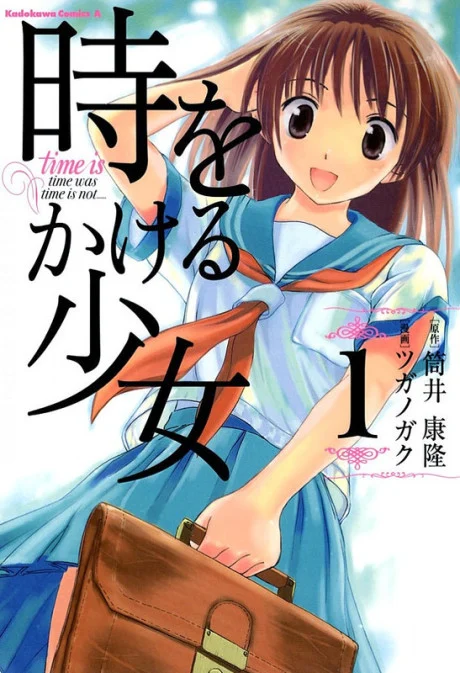
This two volume manga is one of the more modest entries in the long afterlife of Yasutaka Tsutsui's 1965 novel, and that modesty is exactly what makes it worth a reader's attention. Running seven chapters across two books, it approaches the familiar premise of a high school girl who slips backward through her own recent past without the visual spectacle that other adaptations of the material brought to the screen. The result is a gentler, more interior telling, one that treats time travel as a private problem rather than a public event.
The experience here leans heavily on the everyday. Classrooms, hallways, and the small social frictions of teenage life carry as much weight as the strange accident that sets everything in motion. Comedy, romance, and quiet slice of life passages sit alongside the science fiction hook, and the heroine's shifting priorities give the book its emotional spine. Readers who prefer character driven speculative fiction to hard mechanics will find the tone welcoming.
Because this version is short, it is also approachable. Someone curious about the novel but wary of a longer commitment can finish it in an evening or two, and the teen cast and school setting make it an easy entry point for younger readers. It works best as a compact companion piece rather than a definitive account, yet it still captures the warmth and wistfulness that keep this premise alive across so many retellings.
Should You Read It?
Read it if you enjoy
- Read if you want a short, character-driven take on time travel that treats the ability as a private problem rather than a public spectacle.
- A good fit for readers curious about Yasutaka Tsutsui's 1965 novel but wanting to sample one adaptation first; no prior franchise homework is required.
- Appeals to those who enjoy school-life stories where classrooms, friendships, and teenage priorities share space with a speculative hook.
It may not suit you if
- May not suit readers seeking hard science-fiction explanations; the focus stays on everyday school life and emotional consequences.
- If you expect the visual scale or cinematic set pieces of other adaptations, this two-volume manga takes a quieter, more interior approach.
- Readers who prefer long, detailed time-loop mechanics may find the seven-chapter scope brief.
This automatic starting point balances the series length, pacing, time commitment, and available Volluble research data. Editors can override it when firsthand knowledge suggests a better entry point.
Why It Connects With Audiences
Why people love it
- Its modest scale is a strength: the story can be finished in an evening or two while still delivering comedy, romance, and slice-of-life beats.
- The heroine's shifting priorities and the small social frictions of teen life give the time-travel premise an emotional spine.
- As an alternate adaptation of a classic novel, it offers a gentler interpretation that can be compared with the 1983 and 2006 films.
Common criticisms
- Some readers may feel the manga's quiet everyday emphasis undersells the science-fiction hook compared with more spectacle-driven adaptations.
- Because it is an adaptation rather than the origin point, it may feel like a companion to Tsutsui's novel instead of a complete substitute.
- The short chapter count can leave those wanting deeper exploration of the time-travel rules wishing for more.
Volluble DNA
A quick profile of the title’s dominant storytelling ingredients.
Characters3 characters
Kazuko Yoshiyama
Main characterKazuo Fukamachi
Main characterMariko Kamiya
Supporting characterManga Staff4 credits
View all 2 additional credits
Where This Fits in The Girl Who Leapt Through Time
A spoiler-light guide to where this exact work fits within the broader The Girl Who Leapt Through Time franchise.
-
Step 1
Start with Yasutaka Tsutsui's original 1965 novel, first collected as a book in 1967, because it is the source text that every adaptation, including this one, draws from.
-
Step 2
Read this 2003 two-volume, seven-chapter manga as an adaptation of that novel rather than as the franchise's origin point. It retells Kazuko's time-leaping story and can be read first without prior homework.
-
Step 3
Treat the 1983 live-action film and the 2006 anime film directed by Mamoru Hosoda as separate alternate adaptations. They are not sequels to this manga, so nothing here must be finished before or after them.
-
Step 4
For the fullest view, sample the novel first, then compare how this manga and the two films each reinterpret the same premise in their own way.
Franchise Path
- Start with Yasutaka Tsutsui's 1965 novel, the source text for this 2003 two-volume manga adaptation.
- This manga retells Kazuko's time-leap story and can be read first without prior franchise homework.
- The 1983 live-action film and 2006 anime film are separate alternate adaptations, not sequels to this manga.
After You Finish
Continue with
- This 2003 manga is a complete seven-chapter, two-volume adaptation, so no direct sequel continues it.
- After finishing, revisit the original novel or compare the 1983 and 2006 film versions as separate reinterpretations.
Community Verdict
Quick reader and viewer signals from the Volluble community.
Would you recommend this?
Did the ending satisfy you?
Would you read it again?
Report an issue
Spot something wrong on this page? Tell us what needs attention.
0 Comments
Be the first to comment.