
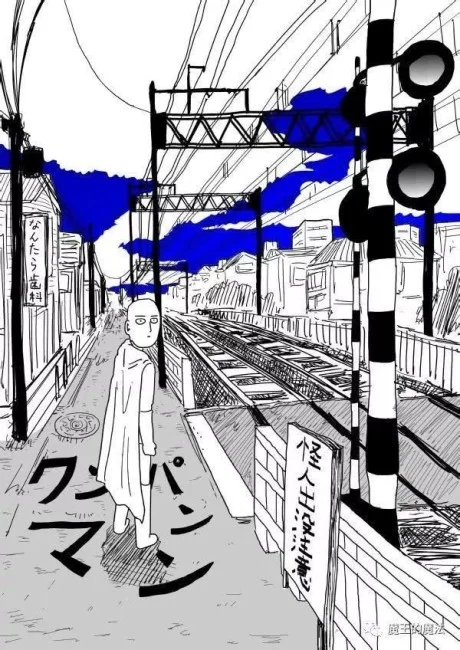
Overview
One Punch Man matters because it turns the fantasy of absolute strength into a source of comic dissatisfaction. Saitama can end any battle with a single punch, so victory is no longer the destination. Instead, the manga uses his boredom to question why heroes seek power, recognition, and ever greater challenges. Its superhero parody is not merely a joke about familiar costumes and powers. It also gives the action genre room to examine purpose, identity, and the uneasy gap between public reputation and genuine ability.
The reading experience moves comfortably between explosive combat, absurd comedy, supernatural spectacle, and quieter philosophical touches. Its world makes space for martial artists, cyborgs, aliens, gods, and other larger-than-life threats, while an adult-heavy cast keeps the tone from feeling like a straightforward coming-of-age adventure. Readers who enjoy superhero stories but want their conventions bent, or action manga that can undercut its own drama, may find this an especially approachable entry point. The premise is immediately clear, yet the parody, gore, nudity, and broader thematic range give the work more texture than its central joke suggests. This is the original manga experience, best approached as a playful and self-aware take on power rather than as a simple contest to find the strongest fighter.
Synopsis
Saitama is an independent superhero who has trained until he can defeat any opponent with a single punch. Although this ability makes him extraordinarily powerful, it has also taken the excitement out of his work. Battles that should test his strength end almost immediately, leaving him frustrated rather than triumphant. He continues to search for a worthy opponent while trying to understand why becoming the strongest hero has brought him so little satisfaction.
As Saitama encounters other heroes, powerful martial artists, unusual villains, cyborgs, and threats that reach beyond ordinary human limits, his personal search becomes part of a much larger struggle. Some allies are driven by discipline, pride, justice, or the desire to prove themselves, creating contrasts with Saitama's understated attitude and overwhelming ability. The manga balances superhero action with comedy and satire, while exploring the meaning of strength, recognition, purpose, and the challenge of finding fulfillment when victory is guaranteed. Its central conflict is therefore both physical and personal: Saitama must face escalating dangers while seeking the excitement and sense of direction that his unmatched power has taken away.
Should You Read It?
Read it if you enjoy
- Read if you enjoy superhero action that parodies genre conventions while questioning strength, recognition, and purpose.
- Start here for ONE’s original 2009 manga continuity and a premise built around a hero who wins every battle with one punch.
It may not suit you if
- May not suit readers who need consistently suspenseful fights, since Saitama’s overwhelming ability can undercut conventional battle stakes.
- The mix of comedy, gore, nudity, supernatural spectacle, and philosophical touches may feel tonally uneven for readers seeking a single mood.
Why It Connects With Audiences
Why people love it
- Readers may enjoy the contrast between Saitama’s boredom and the intense ambitions of heroes, martial artists, cyborgs, and other larger-than-life figures.
- The manga offers accessible superhero satire while giving its central joke broader questions about fulfillment, identity, recognition, and meaningful challenge.
Common criticisms
- Some readers may find guaranteed victories reduce the tension usually associated with action-manga confrontations.
- Its shifts between absurd comedy, explosive combat, gore, nudity, and quieter reflection may not work equally well for every reader.
Volluble DNA
A quick profile of the title’s dominant storytelling ingredients.
Characters25 characters
Saitama
Main characterGenos
Main characterGenus Hakase
Supporting characterButagami
Supporting characterZeniru
Supporting characterOnsoku no Sonic
Supporting characterSneck
Supporting characterBang
Supporting characterTatsumaki
Supporting characterFubuki
Supporting characterBofoi
Supporting characterSatoru
Supporting characterTanktop Tiger
Supporting characterTanktop Black Hole
Supporting characterMosquito Musume
Supporting characterGround Dragon
Supporting characterArmored Gorilla
Supporting characterAsura Kabuto
Supporting characterHammer-Head
Supporting characterBanken Man
Supporting characterPuri-Puri Prisoner
Supporting characterIkemen Kamen Amai Mask
Supporting characterStinger
Supporting characterMax
Supporting characterShinkaiou
Supporting characterManga Staff1 credits
Production Background
One Punch Man was created by ONE and began as a Japanese webcomic in 2009, with the manga record listing a start date of July 3, 2009. The original work was drawn by ONE and established the premise of Saitama, a hero whose overwhelming strength leaves him searching for a meaningful challenge. This version is classified as an original manga rather than an adaptation from another source, and it remains in release.
A digital manga remake, illustrated by Yusuke Murata, began publication on Shueisha's Tonari no Young Jump website in June 2012. The remake's chapters are collected into tankobon volumes, and VIZ Media licensed that manga for English-language release in North America, including serialization through its digital Weekly Shonen Jump magazine. The production history also includes an anime adaptation produced by Madhouse, although this page concerns the manga work rather than that separate screen version. The contrast between ONE's original webcomic and Murata's later illustrated remake is the central distinction in the series' publication history, while Shueisha's web platform and VIZ's English-language edition provided the main documented publishing channels for the remake.
Franchise Context
This entry is the original One Punch Man manga created by ONE, which began in 2009. It is the starting work of the franchise rather than a continuation, spin-off, or adaptation of an earlier manga. The record classifies its source as original, distinguishing it from versions that later rework or adapt the same premise.
The franchise subsequently expanded through a digital manga remake illustrated by Yusuke Murata, which began publication in 2012, as well as an anime adaptation. Those are related versions of the property, not alternate names for this individual entry. Accordingly, this page covers ONE’s original manga work and its place as the foundation for the later remake and screen adaptation.
Where This Fits in One-Punch Man
A spoiler-light guide to where this exact work fits within the broader One-Punch Man franchise.
-
Step 1
Start with this record if you want the original One Punch Man webcomic continuity, which began in 2009.
-
Step 2
No earlier franchise entry is required, since the supplied record has no listed prerequisite works.
-
Step 3
The illustrated manga remake that began in 2012 is an alternate version rather than a required sequel, so it can follow this work as a separate reading experience.
Franchise Path
- Start with ONE's original webcomic manga from 2009, the franchise foundation centered on Saitama's boredom with unbeatable strength.
- Then try Yusuke Murata's illustrated manga remake from 2012 as a separate version of the same premise.
- The anime adaptation follows as another related version, rather than a continuation of this manga entry.
After You Finish
Continue with
- No required continuation: this original manga stands as the franchise's starting work, while the remake is an alternate version rather than a sequel.
Community Verdict
Quick reader and viewer signals from the Volluble community.
Would you recommend this?
Did the ending satisfy you?
Would you read it again?
Report an issue
Spot something wrong on this page? Tell us what needs attention.
0 Comments
Be the first to comment.