
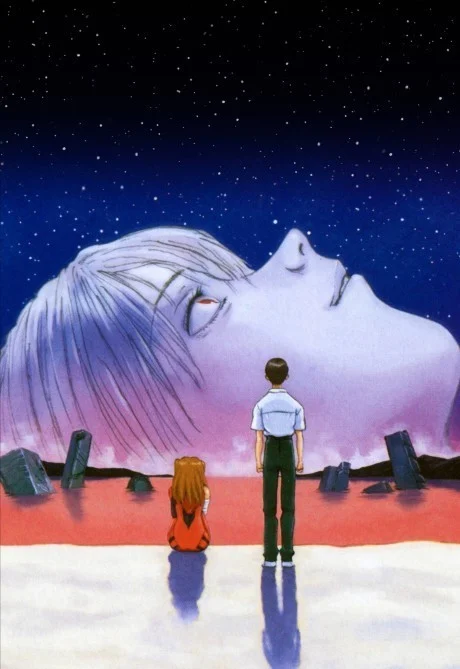
Overview
Neon Genesis Evangelion: The End of Evangelion matters as a feature-length answer to one of anime’s most psychologically ambitious television stories. Rather than functioning as a detached retelling, this 1997 film offers a concurrent ending that pushes the series’ conflicts into a harsher, more expansive form. Its importance lies in how confidently it treats mecha spectacle, adolescent distress, religious imagery, and philosophical uncertainty as parts of the same dramatic language.
At 87 minutes, the film is concentrated and exceptionally intense. It moves from military crisis and apocalyptic science fiction toward imagery that can feel surreal, confrontational, and deliberately difficult to resolve. The experience is less about tidy explanations than about inhabiting the characters’ fear, isolation, and desperate need for connection. Action, tragedy, gore, and meta-fictional ideas coexist without softening one another, making this a film that rewards attention but rarely offers comfort.
Viewers who enjoy challenging psychological anime, bleak coming-of-age stories, or science fiction that treats its giant robots as extensions of human conflict may find it especially compelling. It is most approachable for those already familiar with the Evangelion television series, since the film assumes that foundation and works as a companion conclusion rather than a simple standalone introduction. Audiences sensitive to graphic violence, nudity, or emotionally severe material should also approach it with care.
Synopsis
Neon Genesis Evangelion: The End of Evangelion opens with NERV under a devastating assault from SEELE, turning the organization’s long-running conflict into an immediate fight for survival. As hostile forces close in, the Evangelion pilots are left in a dangerously vulnerable state. Asuka is in a coma, while Shinji is overwhelmed by a severe emotional crisis, leaving him unable to respond to the escalating emergency with his usual resolve. The film’s apocalyptic science-fiction setting places military action, giant robots, and personal trauma in the same unstable arena.
At the center of the story is Shinji’s struggle to act while confronting fear, isolation, and the weight of expectations placed on him. As NERV’s defenses falter, the battle becomes inseparable from the private conflicts of its young pilots and the hidden purposes of the adults directing them. The film follows the collision between SEELE’s attack, NERV’s desperate resistance, and the pilots’ uncertain ability to distinguish duty from personal choice. Its increasingly surreal presentation examines connection, identity, and the possibility of escape from emotional pain without reducing the conflict to a simple victory for either side. Conceived as a concurrent conclusion to the final episodes of the Neon Genesis Evangelion television series, this 1997 feature delivers a darker, more cinematic account of the crisis while leaving its largest revelations for the unfolding drama.
Trailer
Should You Watch It?
Watch it if you enjoy
- Watch after the Neon Genesis Evangelion television series for a concurrent, feature-length conclusion to its conflicts and characters.
- Consider it if you enjoy psychologically intense mecha, bleak coming-of-age drama, and science fiction that embraces surreal imagery and philosophical uncertainty.
It may not suit you if
- It may not suit viewers seeking a self-contained entry point, tidy explanations, or a straightforward continuation without prior series context.
- Its concentrated 87-minute presentation includes severe emotional distress, gore, nudity, apocalyptic violence, and deliberately confrontational imagery.
The primary starting work is a movie, so the full film is the natural Volluble Test Drive. This gives you the complete story instead of applying an episodic trial to a feature-length work.
Why It Connects With Audiences
Why people love it
- The film brings military crisis, giant-robot action, adolescent trauma, and questions about identity and connection into one unusually unified dramatic experience.
- Viewers may value its ambitious, surreal treatment of the television story and its willingness to leave emotional and philosophical questions unresolved.
Common criticisms
- Some viewers may find its intense imagery, bleak atmosphere, and emotional pressure difficult to engage with or needlessly confrontational.
- Its concurrent relationship to the television ending and preference for ambiguity may frustrate those expecting a single, plainly explained resolution.
Volluble DNA
A quick profile of the title’s dominant storytelling ingredients.
Characters and Voice Actors16 characters
Shinji Ikari
Main character- Japanese: Megumi Ogata
- English: Spike Spencer
- English: Casey Mongillo
Misato Katsuragi
Main character- Japanese: Kotono Mitsuishi
- English: Allison Keith-Shipp
- English: Carolyn Keranen
Rei Ayanami
Main character- Japanese: Megumi Hayashibara
- English: Amanda Winn Lee
- English: Ryan Bartley
Asuka Langley Souryuu
Main character- Japanese: Yuuko Miyamura
- English: Tiffany Grant
- English: Stephanie McKeon
Ritsuko Akagi
Supporting character- Japanese: Yuriko Yamaguchi
- English: Sue Ulu
- English: Erica Lindbeck
Shigeru Aoba
Supporting character- Japanese: Takehito Koyasu
- English: Jason C. Lee
- English: Billy Kametz
Kohzou Fuyutsuki
Supporting character- Japanese: Motomu Kiyokawa
- English: Michael Ross
- English: JP Karliak
Makoto Hyuuga
Supporting character- Japanese: Hiro Yuuki
- English: Keith Burgess
- English: Daniel MK Cohen
Maya Ibuki
Supporting character- Japanese: Miki Nagasawa
- English: Christine Cabanos
- English: Amy Seeley
Gendou Ikari
Supporting character- Japanese: Fumihiko Tachiki
- English: Tristan Macavery
- English: Ray Chase
Yui Ikari
Supporting character- Japanese: Megumi Hayashibara
- English: Amanda Winn Lee
Ryouji Kaji
Supporting character- Japanese: Kouichi Yamadera
- English: Greg Chun
- English: Aaron Krohn
Kaworu Nagisa
Supporting character- Japanese: Akira Ishida
- English: Aaron Krohn
- English: Clifford Chapin
Keel Lorentz
Supporting character- Japanese: Mugihito
- English: D.C. Douglas
- English: Tom Booker
Kyouko Zeppelin Souryuu
Supporting character- Japanese: Maria Kawamura
- English: Kimberly Yates
Pen Pen
Background characterProduction and Staff27 credits
View all 15 additional credits
Production Background
Neon Genesis Evangelion: The End of Evangelion is an original Japanese animated feature rather than an adaptation of previously published manga or prose. It was released as a single 87-minute movie on July 19, 1997, and is credited as a completed anime film. Its production belongs to the Neon Genesis Evangelion feature-film project that followed the television series. That project was developed in response to the success of the series and strong fan demand for an alternate ending, placing this movie within a larger effort to extend and reshape the televised story through theatrical animation.
The film was made to provide a concurrent ending to the final two episodes of Neon Genesis Evangelion. Its setup continues from the series with NERV under a brutal attack by SEELE, while Asuka remains in a coma and Shinji is experiencing a nervous breakdown. These circumstances lead into the movie's surreal treatment of the story's conclusion, distinguishing it from a simple recap compilation. The related 1997 feature project also included Neon Genesis Evangelion: Death & Rebirth, whose first section revisited earlier television material and whose second section formed part of the broader theatrical continuation. The End of Evangelion is therefore the individual feature focused on the alternate concluding material, not a summary entry for the entire franchise.
Franchise Context
Neon Genesis Evangelion: The End of Evangelion is a 1997 anime feature that continues the story of the original Neon Genesis Evangelion television series. It is not a remake, spin-off, or adaptation of a separate manga source. Instead, it was produced as a theatrical conclusion to the TV anime, whose final episodes had left room for an additional, more fully realized resolution.
Within the franchise, this movie functions as an alternate or concurrent ending to the series rather than as a new beginning. Its events follow the established conflict involving NERV and SEELE and the psychological crises of the central cast, so it is best approached after the television series rather than as an entry point. The film is separate from Neon Genesis Evangelion: Death & Rebirth, the earlier 1997 feature project installment that included recap material and helped lead into the theatrical continuation. The End of Evangelion stands as its own 87-minute movie, offering a feature-length conclusion to the original anime continuity rather than representing the franchise as a whole.
Where This Fits in Neon Genesis Evangelion
A spoiler-light guide to where this exact work fits within the broader Neon Genesis Evangelion franchise.
-
Step 1
Start with the Neon Genesis Evangelion television series, since this film builds on the show's story and characters.
-
Step 2
Finish the series before watching this movie, including its final two episodes, which the film presents a concurrent alternative conclusion to.
-
Step 3
Death & Rebirth is optional: use it as a recap-oriented film experience rather than a required step before The End of Evangelion.
-
Step 4
Watch The End of Evangelion as the franchise's alternate film conclusion to the television ending, with no supplied work required afterward.
Franchise Path
- Watch Neon Genesis Evangelion first; this film provides a concurrent alternate ending to the television series.
- Death & Rebirth is optional recap material before this completed 87-minute movie.
After You Finish
Continue with
- No further supplied franchise step is required; this movie stands as the alternate film conclusion to the original anime.
Community Verdict
Quick reader and viewer signals from the Volluble community.
Would you recommend this?
Did the ending satisfy you?
Would you watch it again?
Report an issue
Spot something wrong on this page? Tell us what needs attention.
0 Comments
Be the first to comment.