
Overview
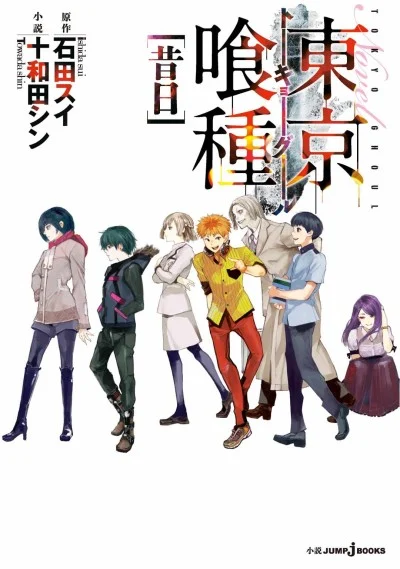
Tokyo Ghoul: Past matters as a compact companion to the Tokyo Ghoul setting, offering a look at the world before the series’ defining transformation. Rather than presenting the full franchise, this finished, six-chapter work narrows its attention to an earlier stage of the characters’ lives, when Kaneki was still human, the Kirishima family remained together, and Rize’s predatory nature was already part of the city’s hidden reality. That perspective gives familiar names a different weight without requiring this volume to retell the main story.
Its appeal lies in atmosphere and implication. The action, supernatural horror, and psychological drama suggest a Tokyo where danger is woven into ordinary crowds, while the prequel framing invites readers to notice the tension between everyday identity and monstrous appetite. As a single-volume light novel presented for manga-oriented readers, it offers a relatively approachable entry for fans who want a brief, character-focused expansion rather than another long commitment. Readers drawn to morally uneasy horror, secret societies, and stories that question the boundary between human and monster may find it especially rewarding. Newcomers can appreciate its contained scale, though its strongest effects will likely land for those already interested in Tokyo Ghoul’s central world and characters.
Synopsis
Tokyo Ghoul: Past is a finished light novel set before the steel frame incident in Tokyo’s 20th Ward, during a period when Ken Kaneki is still an ordinary human. Although humans and ghouls resemble one another, ghouls can survive only by eating human flesh, forcing them to conceal their nature and hunt among the city’s population. Reports of ghouls moving through the crowds create an atmosphere of fear and uncertainty as their predatory presence remains hidden in everyday Tokyo.
The story follows several figures whose lives precede the opening events of Tokyo Ghoul. Kaneki appears before his transformation, while the Kirishimas are still living together and Rize is pursuing her own feasts. Their circumstances provide a view of the people and tensions surrounding the series before its central upheaval, including the contrast between ordinary human life and the secret world of the ghouls. The primary conflict grows from that uneasy coexistence: ghouls must stalk prey without exposing themselves, while humans remain largely unaware of the danger around them. As these lives and hidden activities intersect, the novel builds a psychological horror story about predation, secrecy, and the fragile boundary between human society and the monsters within it.
Should You Read It?
Read it if you enjoy
- Read it if you want a brief prequel focused on Kaneki, the Kirishimas, and Rize before Tokyo Ghoul’s opening events.
- Its six-chapter, single-volume format suits readers seeking atmospheric psychological horror without a long commitment.
It may not suit you if
- It may not suit readers looking for the main story’s central transformation or a full continuation of its narrative.
- The hidden predation, human-flesh premise, and morally uneasy horror may be uncomfortable for readers sensitive to disturbing themes.
This automatic starting point balances the series length, pacing, time commitment, and available Volluble research data. Editors can override it when firsthand knowledge suggests a better entry point.
Why It Connects With Audiences
Why people love it
- The pre-story setting gives familiar characters different context while exploring a time when Kaneki was still human.
- Its compact focus on secrecy, stalking, and the boundary between human and monster supports a tense supernatural atmosphere.
Common criticisms
- As a supplementary prequel, it may feel less substantial to readers expecting the scope of the main Tokyo Ghoul story.
- Its emphasis on earlier circumstances and implication may offer less forward narrative momentum than a direct sequel or main-series installment.
Volluble DNA
A quick profile of the title’s dominant storytelling ingredients.
Characters17 characters
Ken Kaneki
Main characterTouka Kirishima
Main characterNishiki Nishio
Main characterKimi Nishino
Main characterAyato Kirishima
Main characterRize Kamishiro
Main characterHideyoshi Nagachika
Main characterAkira Mado
Main characterYukinori Shinohara
Supporting characterEnji Koma
Supporting characterKureo Mado
Supporting characterSeidou Takizawa
Supporting characterYoshimura
Supporting characterArata Kirishima
Supporting characterKazuichi Banjou
Supporting characterKaya Irimi
Supporting characterKoutarou Amon
Background characterManga Staff3 credits
View all 1 additional credits
Production Background
Tokyo Ghoul: Past is a completed light novel set before the opening events of Tokyo Ghoul. The work is credited in the supplied catalog as a six-chapter, single-volume release, with its source material identified as a light novel rather than an anime adaptation or a manga serialization. Its setting places the narrative before the steel frame incident in the 20th Ward, when Kaneki was still human and the Kirishima family remained together. This position gives the book a defined pre-story role while keeping its focus on an earlier period of the setting.
The Japanese release was completed on December 19, 2014, the only publication date recorded for the work. The supplied record does not provide a named author, illustrator, animation studio, Japanese publisher, or adaptation staff credit for this individual volume, so those production details cannot be confirmed here. It does identify VIZ Media in connection with the work's source description and lists VIZ in its availability information, indicating an English-language release or distribution connection. Tokyo Ghoul: Past therefore stands as a finished, one-volume prose entry released in 2014, rather than a multi-volume manga installment or an animated production. Its compact six-chapter format and pre-opening placement distinguish its production profile from the longer serial format associated with the main manga.
Franchise Context
Tokyo Ghoul: Past is a finished light novel within the Tokyo Ghoul franchise, rather than the beginning of the main story. Released in 2014 and collected in one volume of six chapters, it functions as a prequel to the opening events of the original Tokyo Ghoul manga. The entry therefore adds earlier material to the setting instead of retelling the manga’s starting point or continuing its central narrative.
Its placement is defined by the period before the steel frame incident in the 20th Ward. At this stage, Ken Kaneki is still human, the Kirishima family remains together, and Rize is active as a ghoul. These details position the novel as background fiction focused on the circumstances and characters surrounding the franchise’s initial status quo. It is a prose companion to the manga, not an anime adaptation, remake, sequel series, or alternate version of the original work. Its compact format makes it a supplementary prequel that can be read for additional context around the main manga’s opening.
Where This Fits in Tokyo Ghoul
A spoiler-light guide to where this exact work fits within the broader Tokyo Ghoul franchise.
-
Step 1
Start with the original Tokyo Ghoul manga for the core introduction to its setting and characters.
-
Step 2
Read Tokyo Ghoul: Past as an optional prequel novel. It covers events before the opening of Tokyo Ghoul, including a time when Kaneki was still human.
-
Step 3
Continue with the original Tokyo Ghoul manga after Past, or read Past afterward if you prefer to encounter its background material without changing the main series' introduction.
Franchise Path
- Read the original Tokyo Ghoul manga for the core story, then use Tokyo Ghoul: Past as an optional prequel.
- Tokyo Ghoul: Past is a finished, single-volume light novel set before the main manga’s opening events.
After You Finish
Continue with
- No further continuation is required: this prequel is complete; continue within the franchise with the original Tokyo Ghoul manga.
Community Verdict
Quick reader and viewer signals from the Volluble community.
Would you recommend this?
Did the ending satisfy you?
Would you read it again?
Sources2 sources
Report an issue
Spot something wrong on this page? Tell us what needs attention.
0 Comments
Be the first to comment.