
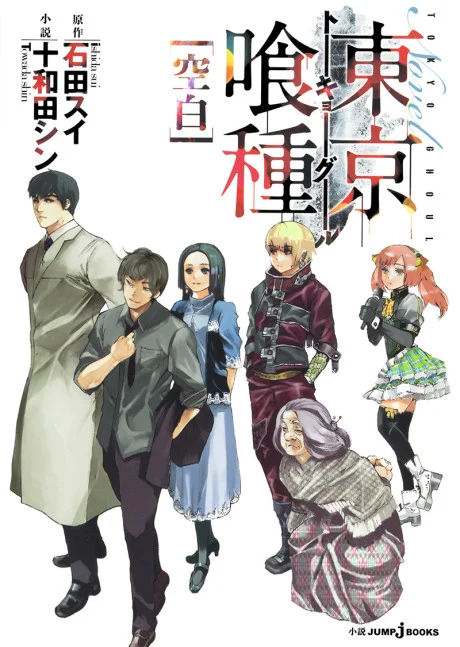
Overview
Tokyo Ghoul: Void matters as a compact expansion of the series' moral and social tension, not as a substitute for the main manga. Presented as a finished, five-chapter light novel, it turns its attention to the unsettled period after the 11th Ward occupation and the instability spreading through the 8th Ward. That narrower frame gives the work a useful identity of its own: it is interested in aftermath, retaliation, and the pressure placed on institutions and ordinary people when human and ghoul interests remain impossible to reconcile. For readers who value Tokyo Ghoul's psychological horror more than constant spectacle, Void offers a focused way to revisit that atmosphere while keeping its scope manageable.
The experience is darker and more reflective than a straightforward action side story. Its blend of horror, supernatural conflict, drama, and psychological unease makes it a natural fit for readers who enjoy morally compromised characters, tense social boundaries, and stories where violence carries lingering consequences. At the same time, the single-volume format and five-chapter length make it approachable for anyone curious about the franchise's literary side or looking for a brief companion read. Familiarity with the central Tokyo Ghoul setting will add context to its conflicts and references, but readers who prefer concise worldbuilding to a long commitment may find this individual novel an accessible entry into the series' broader mood.
Synopsis
Tokyo Ghoul: Void is a five-chapter light novel set six months after the occupation of the 11th Ward. In the aftermath of the raid on the ghoul detention center by Aogiri Tree, the Commission of Counter Ghoul moves to reinforce security throughout Tokyo’s twenty-three wards. The crackdown reflects the unstable balance between humans and ghouls, whose opposing needs and methods have turned the city into a landscape of fear, surveillance, and recurring violence.
As the Commission attempts to contain the threat, unrest begins spreading among ghouls in the 8th Ward. Their actions continue a cycle of retaliation that makes it difficult to separate protection from persecution or punishment from revenge. Ken Kaneki remains a key point of concern after leaving the 20th Ward, and his uncertain situation adds a personal dimension to the wider crisis. The story follows the pressure placed on investigators, ghouls, and those caught between both sides as security efforts intensify and old conflicts threaten to flare again. Its focus is on the tense aftermath of a major confrontation, exploring the psychological and political consequences without reducing the conflict to a simple battle between good and evil.
Should You Read It?
Read it if you enjoy
- Read it after the original manga’s 11th Ward occupation material for context on its six-month-later aftermath.
- Choose it for a compact, darker companion story focused on retaliation, surveillance, and the unstable human-ghoul conflict.
It may not suit you if
- It may not suit readers seeking the main manga’s full storyline, since this is a five-chapter, one-volume side entry.
- Its focus on psychological unease and institutional pressure may be less appealing if you want a straightforward action narrative.
This automatic starting point balances the series length, pacing, time commitment, and available Volluble research data. Editors can override it when firsthand knowledge suggests a better entry point.
Why It Connects With Audiences
Why people love it
- The narrow format gives the aftermath of a major confrontation a focused identity without requiring a long commitment.
- Its horror and psychological framing explore how security, punishment, and revenge become difficult to separate.
Common criticisms
- Readers unfamiliar with the main manga may find the post-occupation setting and Kaneki’s situation under-contextualized.
- The compact scope may leave less room than the main series for extended character and conflict development.
Volluble DNA
A quick profile of the title’s dominant storytelling ingredients.
Characters17 characters
Touka Kirishima
Main characterHinami Fueguchi
Main characterKoutarou Amon
Main characterUta
Main characterShuu Tsukiyama
Main characterChie Hori
Main characterMisato Gori
Main characterKen Kaneki
Supporting characterYukinori Shinohara
Supporting characterNishiki Nishio
Supporting characterEnji Koma
Supporting characterYoshimura
Supporting characterTaishi Fura
Supporting characterRenji Yomo
Supporting characterSankou
Supporting characterKazuichi Banjou
Supporting characterIwao Kuroiwa
Supporting characterManga Staff3 credits
View all 1 additional credits
Production Background
Tokyo Ghoul: Void is a completed, novel-format entry in the Tokyo Ghoul line, released in Japan on June 19, 2014. The work contains five chapters collected in a single volume. The supplied record identifies its source material as a light novel and classifies the entry as a manga database item with a novel format, distinguishing it from an animated production. No separate author, illustrator, or studio credit is provided for this individual volume. The wider Tokyo Ghoul manga was written and illustrated by Sui Ishida and was serialized in Shueisha’s seinen magazine Weekly Young Jump, providing the creative and publishing context for this related work without establishing that Ishida personally authored every part of the novel.
The book is described as the second Tokyo Ghoul novel and is set after the Aogiri Tree raid on the Ghoul detention center. Its story follows the Commission of Counter Ghoul as it tightens security across Tokyo’s twenty-three wards, while unrest develops in the eighth ward and the consequences of the eleventh ward occupation continue. The narrative is positioned six months after that occupation, including the question of what happened to Kaneki after he left the twentieth ward. The work was released as a finished one-volume publication rather than an ongoing serial, and the supplied material does not document a separate adaptation process, studio production, or remake history. VIZ Media is credited as the source for the English-facing synopsis, while the record lists VIZ among the available services.
Franchise Context
Tokyo Ghoul: Void is a 2014, one-volume light novel entry in the broader Tokyo Ghoul franchise. It is not the beginning of the setting, but a continuation positioned after the 11th Ward occupation, with the story taking place six months later. As the second novel associated with the franchise, it follows the established world and its ongoing conflict rather than introducing a separate continuity.
The franchise’s central work is Sui Ishida’s original Tokyo Ghoul manga, which ran from 2011 to 2014 and was collected in 14 volumes. Void is a prose-format companion to that main story, distinct from the manga in format and from an anime adaptation, remake, or film version. Its five chapters use the period after the major raid as a bridge for further developments, including unrest in the 8th Ward and the unresolved question of Kaneki’s whereabouts after leaving the 20th Ward.
Where This Fits in Tokyo Ghoul
A spoiler-light guide to where this exact work fits within the broader Tokyo Ghoul franchise.
-
Step 1
Begin with the original Tokyo Ghoul manga, which provides the main storyline and context for this companion novel.
-
Step 2
Read Tokyo Ghoul: Void after the manga material covering the 11th Ward occupation, since its story takes place six months afterward.
-
Step 3
Treat Void as an optional side entry rather than an alternate version of the main manga. It follows the resulting unrest in the 8th Ward and Kaneki's situation after leaving the 20th Ward.
Franchise Path
- Read the original Tokyo Ghoul manga first for the setting and main storyline.
- Read Tokyo Ghoul: Void after the 11th Ward occupation; it is the second novel and a companion entry set six months later.
After You Finish
Continue with
- The entry is complete at one volume; continue with the original Tokyo Ghoul manga only for the broader franchise storyline.
Community Verdict
Quick reader and viewer signals from the Volluble community.
Would you recommend this?
Did the ending satisfy you?
Would you read it again?
Sources2 sources
Report an issue
Spot something wrong on this page? Tell us what needs attention.
0 Comments
Be the first to comment.