
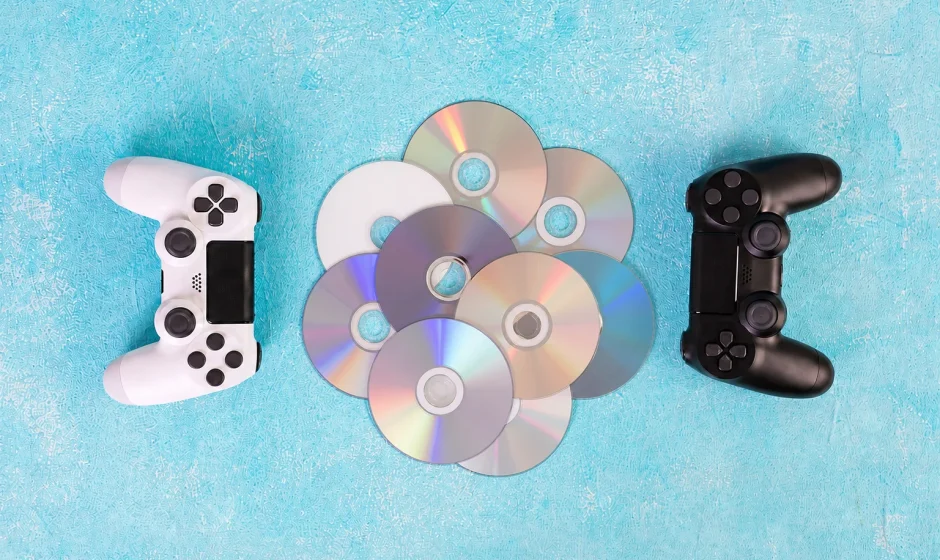
Sony has confirmed that new PlayStation games will no longer be released on physical discs beginning January 2028. The announcement, made via the PlayStation Blog on July 1, 2026, marks a major shift in how players will buy and own games on PlayStation consoles.
After the January 2028 cutoff, all new titles will be available as digital downloads through the PlayStation Store or as retailer codes. Sony says the change reflects a broader industry trend toward digital distribution, with the majority of players now preferring to buy games online rather than on disc.
The decision has drawn sharp criticism from game retailers, preservation advocates, and some players who worry about losing the ability to resell, trade, or loan physical copies. It also raises questions about long-term game ownership, especially after Sony recently removed hundreds of purchased movies from users’ libraries due to lapsed licensing agreements.
For now, games released before January 2028 will continue to be available on disc. But the end of physical production signals a new era for PlayStation, one that could reshape how the industry approaches pricing, access, and consumer rights.
Quick links (related guides):
Official Announcement Details
In a blog post on July 1, 2026, Sony Senior Director Sid Shuman announced that physical disc production for new PlayStation games will end in January 2028. The post stated that “consumer preferences and the broader entertainment industry continue to shift away from physical discs to digital,” making the transition a “natural direction” for Sony.
After the cutoff, new games will be sold in digital format only, both on the PlayStation Store and at retail outlets through digital codes. Sony emphasized that the change does not affect games that have already been released or will release before January 2028. Players who already own disc-based games can continue to play them on PS5 consoles with disc drives.
Industry and Consumer Reactions
The announcement has generated strong pushback from several corners of the gaming industry. Gaming journalist Vikki Blake called it a “body blow to consumer rights,” warning that it poses “huge concern for game conservation and a massive problem for gamers with lower disposable incomes who rely on part-exchanging or loaning games.”
Christopher Dring, editor of The Game Business, expressed surprise despite digital being the dominant format. He noted that “millions and millions of PlayStation games” are still sold physically and that the decision is “tough news for retail.” Lootbox Gaming, an independent retailer in Delaware, called the move “an attack on not only gamers and collectors, but also developers, publishers, distributors and retailers.”
The BBC report also connected the decision to Sony’s recent removal of over 500 films and TV shows from users’ PlayStation Store libraries due to an expired agreement with StudioCanal. Critics argue that such actions undermine trust in digital ownership and make the shift away from physical media even more concerning.
Impact on Pricing and Ownership
The end of physical discs eliminates the used game market, where players could resell or trade in titles to offset the cost of new purchases. Without that option, the effective price of games could rise for budget-conscious players. Digital storefronts rarely offer permanent price drops equivalent to secondhand sales, and sales are controlled entirely by the publisher.
Ownership is another key issue. Buying a disc grants the purchaser a physical copy that can be played, lent, or sold without relying on an online store. Digital purchases are tied to an account and subject to the platform holder’s terms. Sony has not indicated whether it will allow transfer of digital game licenses in the future, leaving questions about long-term access unresolved.
For collectors and preservationists, the loss of physical media means that future access to games depends on server availability and licensing. Organizations like the Video Game History Foundation have raised concerns about preserving games that exist only as digital downloads.
What This Means for the Future
Sony’s decision aligns with a broader industry shift. Just days before the PlayStation announcement, Rockstar Games confirmed that Grand Theft Auto VI would launch without a physical disc, and the game’s physical edition was criticized for containing only a download code. This trend suggests that future console generations may not include disc drives at all, further accelerating the move to all-digital ecosystems.
For now, players who prefer physical media can still buy games released before January 2028, and existing disc libraries remain playable. But after that date, new PlayStation releases will be digital-only, changing how millions of people buy, share, and think about their games. The long-term consequences for pricing, ownership, and game preservation will depend on how Sony and other platform holders address consumer concerns in the years ahead.
Sources
- PlayStation ending game discs sparks questions about future prices | MPR News
- Physical disc production ending in January 2028 for new games releasing on PlayStation consoles – PlayStation.Blog
- PlayStation will stop releasing games on discs in 2028
0 Comments
Be the first to comment.