
Overview
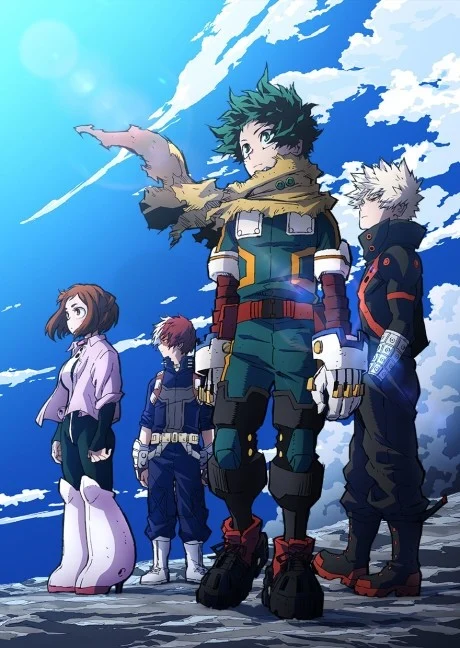
My Hero Academia Season 7 is a pivotal individual installment in the long-running superhero saga, arriving in 2024 with 21 episodes. It matters because it moves the story beyond the school setting into a nationwide crisis where hero society's credibility is tested. The season's introduction of Star and Stripe adds an international dimension and raises the stakes for the heroes' confrontation with the Paranormal Liberation Front. For dedicated followers, this is where accumulated loyalties, losses, and rivalries pay off in a sustained action-forward arc.
The experience is defined by momentum and scale. Episodes blend superhero spectacle with themes of terrorism, war, tragedy, and public trust, while the large ensemble keeps multiple perspectives in play. Viewers who enjoy shounen action with emotional weight and strategic team battles will find plenty to engage with, though the season assumes familiarity with prior events. Its darker turns and violence are consistent with the series' later arcs.
Approachability depends on context. Fans who have followed the anime or manga will get the most from Season 7, especially with the English dub and streaming availability on Crunchyroll, Hulu, and other platforms. Newcomers should begin with earlier seasons to understand the relationships and stakes. As an individual work, it rewards patience, attention to character arcs, and appreciation for a superhero narrative willing to confront institutional collapse.
Synopsis
Season 7 begins in the aftermath of the large-scale confrontation with the Paranormal Liberation Front, a battle that has left Japan badly shaken and the public's confidence in professional heroes deeply damaged. As villain activity spreads and trust erodes, Izuku Midoriya and his classmates at U.A. High must reckon with the cost of what has already been lost while the remaining Pro Heroes scramble to regroup and plan their next move.
Hoping to shift the balance before the conflict escalates further, All Might calls on an ally from overseas: Star and Stripe, the top-ranked hero of the United States. Her arrival brings a powerful new presence into the fray, and her abilities quickly draw attention from the villains' side, setting up a confrontation that unfolds well away from the students' usual classrooms and training grounds.
Meanwhile, the U.A. students and the surviving heroes work to prepare for a decisive clash with Tomura Shigaraki and All For One. The season mixes large-scale action with the ensemble's quieter efforts to ready themselves, as the heroes try to close the distance between their own strength and an enemy whose power continues to grow.
Trailer
Should You Watch It?
Watch it if you enjoy
- Watch if you have followed the earlier My Hero Academia anime, especially Season 6, since Season 7 picks up after the Paranormal Liberation Front battle and builds on that aftermath.
- Watch if you enjoy superhero action with strategic team battles, large-scale stakes, and emotional weight tied to hero society's damaged public trust.
- Watch if you are interested in the main anime continuation adapting manga volumes 34-39 and the introduction of Star and Stripe, America's top-ranked hero.
- Watch if you want the English dub or streaming access, as the season is dubbed and available on services including Crunchyroll and Hulu.
It may not suit you if
- May not suit viewers new to the franchise, because the season is a direct continuation and assumes familiarity with prior events, characters, and losses.
- May not suit those who prefer the earlier school-focused setup, since the story moves beyond U.A. classrooms into nationwide crisis and war-like conflict.
- May not suit viewers sensitive to darker turns, violence, gore, terrorism, tragedy, or war themes that are consistent with the series' later arcs.
- May not suit those seeking a self-contained arc, as the season adapts a dense middle-to-late stretch of the manga and leads toward a decisive clash.
This automatic starting point balances the series length, pacing, time commitment, and available Volluble research data. Editors can override it when firsthand knowledge suggests a better entry point.
Why It Connects With Audiences
Why people love it
- The season delivers momentum and scale, blending superhero spectacle with a nationwide crisis that tests the credibility of hero society.
- Its large ensemble keeps multiple perspectives in play, and the action-forward arc pays off accumulated loyalties, losses, and rivalries for followers.
- Star and Stripe's arrival adds an international dimension and a powerful new presence, raising the stakes against the Paranormal Liberation Front and All For One.
- Bones' production adapts a pivotal manga stretch, with themes of terrorism, war, and tragedy giving the shounen action emotional weight.
Common criticisms
- Because it continues directly from Season 6 and adapts volumes 34-39, the season can feel like a middle chapter rather than a standalone entry.
- The shift away from school life and toward nationwide crisis may disappoint viewers who preferred the earlier classroom and training focus.
- The 21-episode run is shorter than the previous five 25-episode seasons, which may make the dense adaptation feel compressed to some.
- The darker turns and violence are consistent with later arcs, but they may make the season less approachable for viewers seeking lighter superhero fare.
Volluble DNA
A quick profile of the title’s dominant storytelling ingredients.
Characters and Voice Actors25 characters
Izuku Midoriya
Main character- Japanese: Daiki Yamashita
- English: Justin Briner
- English: Lara Woodhull
- Japanese: Akeno Watanabe
Tomura Shigaraki
Main character- Japanese: Kouki Uchiyama
- English: Eric Vale
- Japanese: Arisa Sekine
Katsuki Bakugou
Supporting character- Japanese: Nobuhiko Okamoto
- English: Clifford Chapin
Shouto Todoroki
Supporting character- Japanese: Yuuki Kaji
- English: David Matranga
Toshinori Yagi
Supporting character- Japanese: Kenta Miyake
- English: Christopher Sabat
Ochako Uraraka
Supporting character- Japanese: Ayane Sakura
- English: Luci Christian
Tenya Iida
Supporting character- Japanese: Kaito Ishikawa
- English: J. Michael Tatum
All For One
Supporting character- Japanese: Akio Ootsuka
- English: John Swasey
- Japanese: Hiroshi Kamiya
Enji Todoroki
Supporting character- Japanese: Tetsu Inada
- English: Patrick Seitz
Dabi
Supporting character- Japanese: Hiro Shimono
- Japanese: Ryouko Shiraishi
- English: Jason Liebrecht
Himiko Toga
Supporting character- Japanese: Misato Fukuen
- English: Leah Clark
Keigo Takami
Supporting character- Japanese: Yuuichi Nakamura
- English: Zeno Robinson
Fumikage Tokoyami
Supporting character- Japanese: Yoshimasa Hosoya
- English: Jessie James Grelle
Momo Yaoyorozu
Supporting character- Japanese: Marina Inoue
- English: Colleen Clinkenbeard
Denki Kaminari
Supporting character- Japanese: Tasuku Hatanaka
- English: Kyle Phillips
Kyouka Jirou
Supporting character- Japanese: Kei Shindou
- English: Trina Nishimura
Mezou Shouji
Supporting character- Japanese: Masakazu Nishida
- English: Ian Sinclair
Tamaki Amajiki
Supporting character- Japanese: Yuuto Uemura
- English: Aaron Dismuke
Shuuichi Iguchi
Supporting character- Japanese: Ryou Iwasaki
- English: Larry Brantley
Nejire Hadou
Supporting character- Japanese: Kiyono Yasuno
- English: Lindsay Seidel
Naomasa Tsukauchi
Supporting character- Japanese: Tokuyoshi Kawashima
- English: Alejandro Saab
Shinya Kamihara
Supporting character- Japanese: Kenta Kamakari
- English: John Burgmeier
Tsunagu Hakamada
Supporting character- Japanese: Hikaru Midorikawa
- English: Micah Solusod
Rumi Usagiyama
Supporting character- Japanese: Sayaka Kinoshita
- English: Anairis Quiñones
Moe Kamiji
Supporting character- Japanese: Misato Kawauchi
- English: Lisa Ortiz
Production and Staff26 credits
View all 14 additional credits
Franchise Context
My Hero Academia Season 7 is the seventh television season of the My Hero Academia anime franchise and a direct continuation of the main animated storyline. Produced by Bones, it adapts Kōhei Horikoshi's original manga from the start of volume 34 through the end of volume 39, covering chapters 329 to 398. Because it follows the sixth season rather than restarting the story, it functions as a continuation and adaptation, not as a spin-off, remake, or stand-alone entry.
Within the larger franchise, this season belongs to the primary anime track that began with the first My Hero Academia television series. Its placement after the Paranormal Liberation Front battle makes it a mainline installment in the ongoing adaptation of the manga. The season also had four My Hero Academia: Memories recap specials in April 2024, which bridged the previous season and this one before the seventh season premiered in May 2024. It introduced Star and Stripe, an American Pro Hero, into the anime's main continuity.
Where This Fits in My Hero Academia
A spoiler-light guide to where this exact work fits within the broader My Hero Academia franchise.
Exact position: This is Season 7 and main anime entry 7 of 8. It follows My Hero Academia Season 6.
-
Step 1
Begin with the earlier My Hero Academia anime seasons, especially Season 6, because Season 7 picks up after the Paranormal Liberation Front battle and its aftermath.
-
Step 2
If you need a quick catch-up, watch the four-part My Hero Academia: Memories recap special that aired before Season 7; it reviews Season 6 events and adds a few new minutes.
-
Step 3
Watch My Hero Academia Season 7 after Season 6. It is the main anime continuation adapting manga volumes 34 through 39, chapters 329 through 398, not an optional side story or alternate version.
-
Step 4
Manga readers should reach this material by reading volumes 34 through 39 after volume 33 rather than starting the series here.
-
Step 5
After Season 7, continue with the next anime installment or later manga chapters that cover the remainder of the final conflict.
Franchise Path
After You Finish
Community Verdict
Quick reader and viewer signals from the Volluble community.
Would you recommend this?
Did the ending satisfy you?
Would you watch it again?
Try Something Similar

Report an issue
Spot something wrong on this page? Tell us what needs attention.
0 Comments
Be the first to comment.