
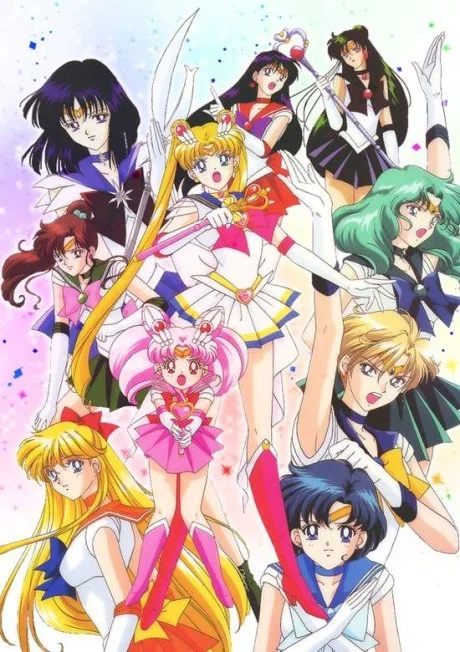
Overview
Sailor Moon S is a 38-episode television season that gives the magical-girl format a more dramatic, ensemble-driven shape. Its appeal comes from the balance between spectacular transformation and super-powered action on one side, and school life, romance, friendship, and everyday comedy on the other. The result is an urban fantasy with a distinctly communal spirit: its female warriors are defined not only by individual strength, but also by loyalty, found family, and the tension between growing up and carrying adult-sized responsibilities.
This season matters for the way it lets lighter and heavier moods coexist. Slapstick and episodic adventures make the setting welcoming, while themes of tragedy, mythology, alien threats, and coming of age give the story greater emotional weight. Viewers who enjoy character-focused teams, primarily female casts, and heroic stories that treat relationships as a source of power may find it especially approachable. It also offers a useful entry point for audiences curious about classic shoujo anime, magical-girl storytelling, or the roots of many later team-based fantasy series. A finished run, available English dub, and streaming availability on Hulu, YouTube, and Netflix make this individual season relatively easy to sample.
Synopsis
In this television season, Usagi Tsukino and the other Sailor Guardians face a new threat that reaches beyond the ordinary battles of their school-age lives. The enemy is the Death Busters, a dangerous force seeking to bring about an era known as the Silence and rule over the world that follows. As strange incidents begin to point toward a larger supernatural crisis, the Guardians must rely on their powers, teamwork, and growing understanding of what it means to protect one another.
Rei’s troubling premonition connects the coming catastrophe to three powerful Talismans, which are needed to summon the Holy Grail. The search for these objects draws the Guardians into conflict with the Death Busters while raising questions about who can be trusted and what sacrifices may be required. At the same time, two mysterious new Sailor Guardians, Sailor Uranus and Sailor Neptune, pursue the Talismans according to their own plan. Their determination to act without Sailor Moon’s help creates tension within the wider group, making the season as much a story about divided responsibilities and uneasy alliances as it is about magical battles.
Trailer
Should You Watch It?
Watch it if you enjoy
- Watch if you enjoy classic magical-girl action balanced with school life, romance, friendship, and comedy.
- Best approached after earlier Sailor Moon seasons, since this 38-episode continuation builds on Usagi and the Guardians while introducing the Death Busters, Uranus, and Neptune.
It may not suit you if
- May not suit viewers seeking a stand-alone story, since it assumes familiarity with the ongoing Sailor Moon cast and setting.
- Its episodic school-life comedy and slapstick may feel uneven for viewers who prefer a consistently serious supernatural drama.
This automatic starting point balances the series length, pacing, time commitment, and available Volluble research data. Editors can override it when firsthand knowledge suggests a better entry point.
Why It Connects With Audiences
Why people love it
- The season gives its primarily female team a strong communal spirit, treating loyalty, found family, and teamwork as sources of power.
- Its mix of transformation spectacle, urban fantasy, tragedy, and coming-of-age themes creates a broader emotional range than its lighter episodes suggest.
Common criticisms
- The contrast between comedy and heavier themes may make the season's tone feel inconsistent to some viewers.
- The central conflict involves divided responsibilities and uneasy alliances, which can make the story feel less direct than a simpler team-versus-enemy adventure.
Volluble DNA
A quick profile of the title’s dominant storytelling ingredients.
Characters and Voice Actors25 characters
Usagi Tsukino
Main character- Japanese: Kotono Mitsuishi
- English: Stephanie Sheh
- English: Linda Ballantyne
Ami Mizuno
Main character- Japanese: Aya Hisakawa
- English: Kate Higgins
- English: Liza Balkan
Rei Hino
Main character- Japanese: Michie Tomizawa
- English: Cristina Vee
- English: Katie Griffin
Makoto Kino
Main character- Japanese: Emi Shinohara
- English: Susan Roman
- English: Amanda Celine Miller
Minako Aino
Main character- Japanese: Rica Fukami
- English: Emilie-Claire Barlow
- English: Cherami Leigh
Chibiusa
Main character- Japanese: Kae Araki
- English: Sandy Fox
- English: Stephanie Beard
Setsuna Meiou
Main character- English: Veronica Taylor
- English: Susan Aceron
- Japanese: Chiyoko Kawashima
Michiru Kaiou
Main character- Japanese: Masako Katsuki
- English: Barbara Radecki
- English: Lauren Landa
Haruka Tenou
Main character- Japanese: Megumi Ogata
- English: Sarah Lafleur
- English: Erica Mendez
Hotaru Tomoe
Main character- Japanese: Yuuko Minaguchi
- English: Jennifer Gould
- English: Christine Cabanos
Mamoru Chiba
Main character- Japanese: Tooru Furuya
- English: Vincent Corazza
- English: Robbie Daymond
Souichi Tomoe
Main character- Japanese: Akira Kamiya
- English: Jeff Lumby
- English: Keith Silverstein
Luna
Supporting character- English: Michelle Ruff
- Japanese: Keiko Han
- English: Jill Frappier
Artemis
Supporting character- English: Johnny Yong Bosch
- Japanese: Yasuhiro Takato
- English: Ron Rubin
Naru Oosaka
Supporting character- English: Danielle Judovits
- English: Mary Long
- Japanese: Shino Kakinuma
Gurio Umino
Supporting character- Japanese: Keiichi Nanba
- English: Benjamin Isaac Diskin
- English: Roland Parliament
Kaolinite
Supporting character- English: Tara Platt
- English: Kirsten Bishop
- Japanese: Noriko Uemura
Mistress 9
Supporting character- Japanese: Yuuko Minaguchi
- English: Jennifer Gould
- Japanese: Yukiyo Fujii
- English: Christine Cabanos
Motoki Furuhata
Supporting character- Japanese: Yuuki Satou
- English: Colin O’Meara
- English: Lucien Dodge
Unazuki Furuhata
Supporting character- English: Veronica Taylor
- Japanese: Miyako Endou
- English: Catherine Disher
Yuuichirou Kumada
Supporting character- English: Wally Wingert
- Japanese: Bin Shimada
- English: Damon D’Oliveira
Eudial
Supporting character- Japanese: Maria Kawamura
- English: Erin Fitzgerald
- English: Loretta Jafelice
Mimete
Supporting character- Japanese: Mika Kanai
- English: Kira Buckland
- English: Catherine Disher
Tellu
Supporting character- Japanese: Chieko Honda
- English: Julie Lemieux
- English: Laura Post
Viluy
Supporting character- English: Julie Ann Taylor
- Japanese: Yoshino Takamori
- English: Daniela Olivieri
Production and Staff26 credits
View all 14 additional credits
Production Background
Sailor Moon S is a television anime adaptation of the manga written and illustrated by Naoko Takeuchi. The series was produced by Toei Animation and TV Asahi, with Junichi Sato, Kunihiko Ikuhara, and Takuya Igarashi credited among its directors. As a 38-episode installment, this production continues the anime’s central magical-girl framework while introducing the Death Busters as its principal opposing force. The story also brings Sailor Uranus and Sailor Neptune into focus as mysterious Sailor Guardians pursuing the Talismans for their own reasons.
The Japanese broadcast began on March 19, 1994, and concluded on February 25, 1995. Each episode has a listed runtime of approximately 24 minutes, and the work is recorded as finished. Its source is identified as manga rather than an original anime concept. The anime’s English-dub history is connected to the North American releases of the first four seasons, which were handled by DIC Entertainment and Cloverway. An English dub is available for this work, and the title is listed through Hulu, YouTube, and Netflix. These release details belong to the television anime production and should be distinguished from the source manga and other adaptations.
Franchise Context
Sailor Moon S is a continuation of the main Sailor Moon television anime, not a remake, spin-off, or separate interpretation. As a 1994 TV series with 38 episodes, it carries the ongoing story of Usagi Tsukino and the Sailor Guardians into a new stage. The series remains part of the original anime adaptation associated with Naoko Takeuchi’s manga, following the earlier Sailor Moon installments rather than functioning as a stand-alone entry.
Within the wider anime storyline, this installment marks a significant turning point through the arrival of the Death Busters and the introduction of the mysterious Sailor Uranus and Sailor Neptune. Their presence expands the established team and changes the balance between the Guardians’ shared mission and competing approaches to protecting the world. Sailor Moon S therefore serves as a central continuation in the core TV series, building on its established cast, magical-girl setting, and serialized conflicts while opening the franchise’s next major chapter.
Where This Fits in Sailor Moon
A spoiler-light guide to where this exact work fits within the broader Sailor Moon franchise.
Exact position: This is Main anime entry 3 and main anime entry 3 of 6. It follows Sailor Moon R.
-
Step 1
If you are beginning the anime franchise, start with the earlier Sailor Moon television seasons to follow Usagi and the Sailor Guardians from their introduction.
-
Step 2
Watch Sailor Moon S as the next main anime season. It is a continuation, not an alternate version or optional side story, and centers on the Death Busters and the arrival of Sailor Uranus and Sailor Neptune.
-
Step 3
After Sailor Moon S, continue with the subsequent Sailor Moon anime season to follow the franchise's next major threat.
Franchise Path
After You Finish
Continue with
Community Verdict
Quick reader and viewer signals from the Volluble community.
Would you recommend this?
Did the ending satisfy you?
Would you watch it again?
Sources2 sources
Report an issue
Spot something wrong on this page? Tell us what needs attention.
0 Comments
Be the first to comment.