
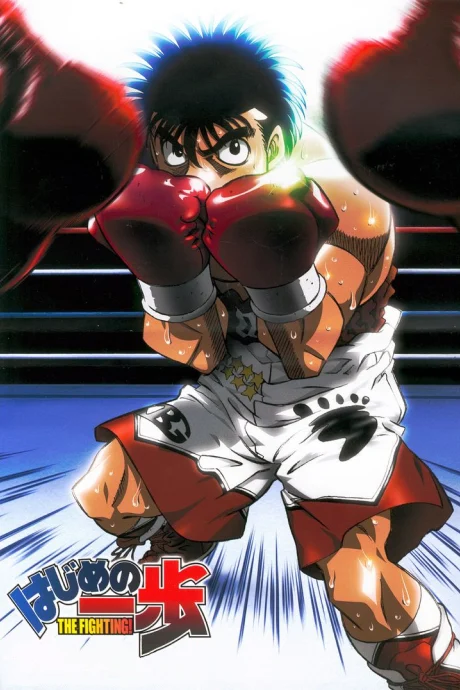
Overview
Hajime no Ippo: The Fighting! makes a persuasive case that a sports anime can be about craft as much as competition. This 2000 Madhouse television series lingers on the mechanics of boxing, the rhythm of a jab, the cost of a bad habit, the patience of a corner, and treats that detail as the source of drama rather than decoration. Where many genre entries chase spectacle, this one builds on discipline, which is a large part of why it still functions as a reference point for later sports stories.
The experience it offers is warmer than its subject might suggest. The comedy is broad, the cast is a true ensemble of gym regulars and rivals rather than one hero surrounded by foils, and the coming of age thread is measured in small gains: a foot that finally moves correctly, a round survived, a fear named out loud. The content stays mild, so the stakes come from effort and character rather than gore.
Because it explains itself so clearly, the show remains approachable for viewers who have never cared about boxing. An English dub exists, and the series is available through Crunchyroll, Netflix, and RetroCrush, so starting is simple. The 75-episode run is a real commitment, but that length is also the point: this is a story about accrual, and the payoff arrives gradually. Anyone drawn to earnest underdogs, training sequences with genuine weight, and humor that sits comfortably beside sincerity should find the first step easy to take.
Opening
Should You Watch It?
Watch it if you enjoy
- Watch if you want a boxing sports drama that treats training, ring craft and incremental self-improvement as the main source of tension.
- Watch if you like coming-of-age stories about a bullied student finding discipline and confidence through a gym community.
- Read the manga from chapter 1 if you want the longer source story that continues far beyond this 2000 TV anime.
It may not suit you if
- May not suit viewers who avoid long commitments; this first TV anime runs 75 episodes.
- May not suit those uninterested in boxing, broad comedy or a primarily male ensemble.
This automatic starting point balances the series length, pacing, time commitment, and available Volluble research data. Editors can override it when firsthand knowledge suggests a better entry point.
Why It Connects With Audiences
Why people love it
- Fans often value its detailed focus on boxing mechanics, corner strategy and the patience behind small improvements.
- Its warm ensemble of gym regulars and rivals gives the coming-of-age arc a lived-in, community feel.
- The mild content and clear explanations make it approachable even if you know little about boxing.
Common criticisms
- The 75-episode length can be a barrier for viewers used to shorter seasonal series.
- The broad comedy and slow-burn training structure may not land for everyone.
Volluble DNA
A quick profile of the title’s dominant storytelling ingredients.
Characters and Voice Actors25 characters
Ippo Makunouchi
Main character- English: Steve Staley
- Japanese: Kouhei Kiyasu
Mamoru Takamura
Main character- Japanese: Rikiya Koyama
- English: Eddie Frierson
Masaru Aoki
Main character- Japanese: Wataru Takagi
- English: Stephen Apostolina
Tatsuya Kimura
Main character- Japanese: Keiji Fujiwara
- English: Grant George
Ichirou Miyata
Main character- Japanese: Tomokazu Seki
- English: Stephanie Sheh
- Japanese: Megumi Tano
- English: Jason Palmer
Genji Kamogawa
Main character- Japanese: Kenji Utsumi
- English: Richard Epcar
Ryou Mashiba
Supporting character- English: Terrence Stone
- Japanese: Masahiko Tanaka
Kumi Mashiba
Supporting character- Japanese: Sanae Kobayashi
- English: Stephanie Sheh
Takeshi Sendo
Supporting character- Japanese: Masaya Onosaka
- English: Doug Erholtz
Naomichi Yamada
Supporting character- Japanese: Daisuke Sakaguchi
- English: Tony Oliver
Eiji Date
Supporting character- English: Tony Oliver
- Japanese: Masaki Aizawa
Alexander Volg Zangief
Supporting character- Japanese: Toshiyuki Morikawa
- English: Dave Wittenberg
- Japanese: Fujiko Takimoto
- English: Barbara Goodson
Masahiko Umezawa
Supporting character- English: Kirk Thornton
- Japanese: Mitsuaki Madono
Haruhiko Yagi
Supporting character- Japanese: Toshihiko Nakajima
- English: Paul St. Peter
Keigo Okita
Supporting character- Japanese: Hiroaki Hirata
Mari Iimura
Supporting character- English: Michelle Ruff
- Japanese: Emi Shinohara
Tomoko Yamaguchi
Supporting character- English: Mona Marshall
- Japanese: Yuuko Kobayashi
Jason Ozuma
Supporting character- Japanese: Masahiro Kobayashi
Yusuke Oda
Supporting character- Japanese: Nobutoshi Kanna
- English: Joe Cappelletti
Jikkyou Announcer
Supporting character- English: Kirk Thornton
- Japanese: Jin Horikawa
Ginpachi Nekota
Supporting character- Japanese: Ichirou Nagai
Hiroko Makunouchi
Supporting character- Japanese: Yorie Terauchi
- English: Joan-Carol O’Connell
Miyata no Chichi
Supporting character- Japanese: Unshou Ishizuka
- English: Paul St. Peter
Yoshio Fujiwara
Supporting character- Japanese: Fumihiko Tachiki
- English: Beau Billingslea
Reiko Mikami
Supporting character- Japanese: Akemi Okamura
- English: Michelle Ruff
Production and Staff24 credits
View all 12 additional credits
Production Background
Hajime no Ippo: The Fighting! is the first television anime adaptation of George Morikawa's long-running boxing manga, which has been serialized in Kodansha's Weekly Shonen Magazine since October 1989. The series was produced by Madhouse and aired on Nippon TV from October 2000 to March 2002, running for 75 episodes at roughly 23 minutes each. It adapts the opening stretch of Morikawa's manga, following high school student Ippo Makunouchi as he is taken in by the Kamogawa boxing gym and begins training under the wing of veteran boxer Mamoru Takamura.
Madhouse handled the animation for this debut series, translating the manga's detailed ring action into weekly television production while preserving the mix of comedy, drama, and sports competition that defines the source material. The show arrived during a period when long-form shonen adaptations were a staple of Japanese television, and its episode count reflects that serialized format rather than a short seasonal run. The story's coming of age thread and its focus on Ippo's gradual growth inside the gym gave the adaptation a clear narrative spine across its broadcast.
The series is finished and remains widely accessible to English-speaking viewers, with an English dub available and streaming offered through Crunchyroll, Netflix, and RetroCrush. Later anime entries continued the franchise in 2009 and 2013, but this page covers the 2000 television series specifically. Its North American distribution history and ongoing streaming presence have kept the debut adaptation as a common entry point for audiences encountering the boxing saga for the first time.
Franchise Context
This 2000 television anime is the first animated adaptation of George Morikawa's long-running boxing manga, which has been serialized in Kodansha's Weekly Shonen Magazine since 1989. It stands at the beginning of the animated franchise rather than in its middle. The screen story of Ippo Makunouchi's arrival at the Kamogawa gym and his early professional career starts here, adapting the opening stretch of the manga, and it remains one of the longest single animated installments in the franchise.
Later animated works continue the same continuity. A television film and an original video animation followed in 2003, then the sequel series Hajime no Ippo: New Challenger aired in 2009, with Hajime no Ippo: Rising following in 2013 and 2014. Those entries pick up the narrative where the earlier adaptation left off rather than retelling it, so this series functions as the foundation the rest of the anime builds upon.
The manga remains the source and the far larger body of work, with well over a hundred collected volumes extending well past the point any anime has reached. For viewers, this entry is the natural starting point, since the later series assume familiarity with the characters, rivalries, and gym established here.
Where This Fits in Hajime no Ippo
A spoiler-light guide to where this exact work fits within the broader Hajime no Ippo franchise.
Exact position: This is Season 1 and the first main anime entry in the current 3-part Volluble path.
-
Step 1
For an anime-first route, start with Hajime no Ippo: The Fighting! (2000). This is the foundational TV series and the main anime starting point, not an optional side story or alternate retelling.
-
Step 2
If you prefer the source material, begin with George Morikawa's Hajime no Ippo manga from chapter 1. The 2000 anime adapts its opening arcs but does not replace the ongoing manga.
-
Step 3
After this series, continue with the 2003 TV film and OVA if available, then move on to Hajime no Ippo: New Challenger (2009).
-
Step 4
Follow New Challenger with Hajime no Ippo: Rising (2013), then continue in the manga beyond the animated material.
Franchise Path
After You Finish
Community Verdict
Quick reader and viewer signals from the Volluble community.
Would you recommend this?
Did the ending satisfy you?
Would you watch it again?
Sources2 sources
Report an issue
Spot something wrong on this page? Tell us what needs attention.
0 Comments
Be the first to comment.